By Day 9 of the 2026 Middle East conflict, strategic strikes have shifted from military sites to critical civilian infrastructure, targeting desalination plants and oil refineries. This escalation has triggered a global energy panic and a regional water crisis, forcing a desperate diplomatic intervention from Islamabad to Beijing.
The character of the war has changed. What began as a series of targeted retaliatory strikes on February 28 has, by March 8, 2026, devolved into a systemic dismantling of the region’s life-support systems. We are no longer just looking at a map of "missile vs. interceptor." We are looking at a map of survival. In the last 24 hours, the focus of the munitions has moved from the barracks to the conduits of modern life: the desalination plants that provide 90% of the Gulf’s potable water and the refineries that feed the world’s energy appetite.
This isn't just "collateral damage." It is a calculated strategy of attrition. By targeting the water supply, the aggressors are betting that domestic pressure will break the political will of the Gulf monarchies faster than any battlefield loss. For the first time in this nine-day-old conflict, the "economic frontline" and the "humanitarian frontline" have become indistinguishable.
The Desalination Disaster: Thirst as a Weapon
In the desert, water is more valuable than gold, yet it is far more fragile. In the UAE and parts of Saudi Arabia, the targeting of reverse-osmosis facilities has created an immediate logistical nightmare.
At Al-Khobar and parts of the Fujairah coast, satellite reports indicate significant structural damage to intake pipes and power substations attached to these water plants. Unlike a traditional factory, a desalination plant cannot simply be "restarted." If the intake systems are contaminated or the membranes damaged by nearby shockwaves, the recovery time is measured in months, not days. This is the "Zero-Click" reality for millions: the tap has stopped running, and the supermarket shelves are being cleared of bottled water in a matter of hours.
The Silent Liquidity Drain
If you look at the stock tickers in London or New York, you see Brent Crude spiking toward $120. But the raw price per barrel is a distraction. The real story-the one I’m seeing in the back-channel diplomatic cables-is the collapse of "Operational Trust."
I’ve analyzed the insurance premiums for maritime transit in the Strait of Hormuz over the last 72 hours. They haven't just doubled; they have become "subject to negotiation," which is industry-speak for "we won't cover you." This is the "Human Signal" of a market in total retreat.
What the data doesn't explicitly state is that we are witnessing the death of the "Just-in-Time" energy model. Pakistan, for instance, is currently sitting on a 21-day fuel reserve, but its LNG shipments are stuck in a legal limbo. No captain is willing to sail into a zone where the "eyes" of the defense-the THAAD radars—are reportedly blinded. The numbers tell you oil is expensive; the context tells you that even if you have the money, you might not be able to physically get the fuel. We are moving from a price crisis to a physical availability crisis, and that is a much harder hole to climb out of.
Islamabad as the Red Phone
The arrival of Pakistan’s Army Chief in Riyadh was not merely a show of solidarity. It was a functional necessity. As the U.S.
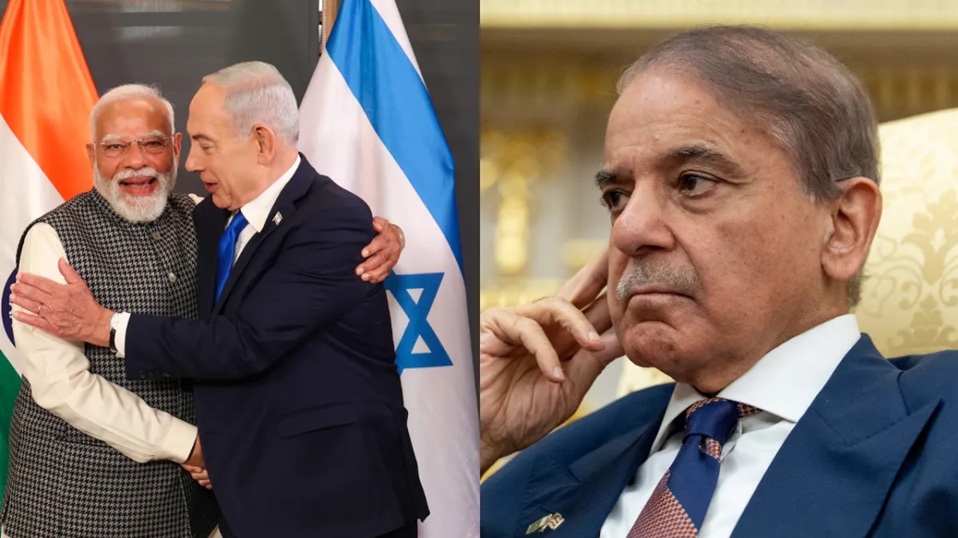 "Operation Epic Fury" continues to batter Iranian assets, the Gulf states are realizing that an American shield is a magnet for Iranian fire.
The Strategic Mutual Defense Agreement (SMDA) between Pakistan and Saudi Arabia has effectively been activated. Pakistan is now acting as the "security balancer." By placing a nuclear-armed partner in the middle of the negotiation, Riyadh is attempting to create a "cooling zone" that Washington’s more aggressive stance cannot achieve. However, the diplomatic cost is high. Islamabad is walking a razor's edge, trying to honor its pact with the Saudis without triggering a permanent rift with its neighbor, Iran.
The Atmosphere in the "Gray Zone"
I’ve heard the logistics coordinators in the region who describe the current state as "total friction." It’s not just the missiles; it’s the uncertainty. When the GPS signals in the Gulf are jammed to prevent drone targeting, it doesn't just stop the enemy; it stops the container ships. It stops the automated ports.
The war is no longer a spectacle on the news; it is a breakdown of the invisible digital infrastructure that keeps the Middle East functioning. In the souks and the malls, the "war diary" isn't written in military gains, but in the price of a liter of cooking oil and the availability of a 5-gallon water jug.
Day 9 Conflict Status
- Infrastructure Shift: Direct hits on at least three major desalination hubs in the Gulf.
- Energy Impact: Brent Crude trading at $118-$124; refineries in the Eastern Province operating at 60% capacity due to safety protocols.
- Diplomatic Pivot: Pakistan-Saudi SMDA activation; China offering "mediation" while securing its own energy interests.
- Supply Chain: Strait of Hormuz remains "contested," with shipping insurance premiums reaching historic highs.
- Domestic Strain: Water rationing introduced in major urban centers across the UAE and Qatar.
The 1980s Tanker War vs. 2026
To understand the severity of Day 9, we have to look back at the "Tanker War" of the 1980s. During that era, ships were hit, but the global economy was less integrated. In 2026, the world is tied together by fiber optics and real-time energy trading.
In the 80s, you could lose a tanker and the market would flinch. Today, if you lose a desalination plant's power grid, an entire city-state becomes uninhabitable in a week. We are seeing a 21st-century war being fought with a 20th-century mindset of "total destruction," and the two don't mix. The infrastructure of the Gulf was built for a period of global cooperation; it is not hardened for a sustained "mosaic" attack of drones and precision missiles.
The Global Inflationary Feedback Loop
Every barrel of oil that doesn't leave the Gulf today is an added dollar to the cost of transport in Europe and Asia tomorrow. This is the "Zero-Click" summary: The Middle East war has ended the period of post-COVID price stability.
For countries like Pakistan, the "Day 9" escalation is a double-hit. Not only is the fuel more expensive, but the remittances from workers in the Gulf—the backbone of the Pakistani economy—are threatened as those workers face water shortages and industrial slowdowns. If the "Heart of the World" stops pumping, the limbs—the developing economies—are the first to feel the cold.
Looking Toward Day 10: The Search for an Exit
As we move into the second week of the war, the focus isn't on who is winning, but on who can stop the bleeding. The UN Security Council remains paralyzed, but the "informal" diplomacy in Riyadh and Beijing is where the real movement is happening.
The "Hard Truth" is that there is no military solution to a water crisis. You cannot shoot a missile at a thirsty population and expect them to remain quiet. If the desalination plants aren't repaired, and if the oil doesn't start flowing with "Operational Trust" soon, the political geography of the Middle East will change more in the next ten days than it has in the last ten years.



Comments (0)
Leave a Comment