A tenuous ceasefire nears expiration as Washington pushes for a rapid accord while Tehran warns of a "maximalist" diplomatic trap.
United States President Donald Trump confirmed on April 20, 2026, that a high-level delegation is en route to Islamabad, Pakistan, to secure a "far better" Iran nuclear deal. Despite Trump’s optimism, Tehran remains defiant, citing "unconstructive signals" and the ongoing naval blockade of the Strait of Hormuz.
The geopolitical landscape shifted violently this Monday as the two-week ceasefire between the United States and Iran teetered on the edge of collapse. From the White House, President Donald Trump broadcasted a message of absolute confidence, promising a new framework that would "guarantee peace" and surpass the 2015 JCPOA in every metric. But on the ground in the Middle East and the diplomatic halls of Islamabad, the reality is far more fractured.
While Trump signals that a deal is coming "relatively quickly"-potentially even today-the Iranian leadership has signaled a hard pivot toward skepticism. President Masoud Pezeshkian, speaking from the frontlines of a fire station in a war-torn district, framed the current American strategy not as diplomacy, but as a demand for surrender.
The Islamabad Round: High Stakes in Pakistan
The choice of Islamabad as a neutral ground underscores Pakistan's growing role as a regional stabilizer. Chief of Army Staff, Field Marshal Asim Munir, has emerged as a central mediator, reportedly holding direct lines to both Trump and the Iranian leadership.
The U.S. delegation, reportedly including Special Envoy Steve Witkoff and adviser Jared Kushner, represents Trump’s "A-team" for Middle East deals. However, conflicting reports regarding Vice President JD Vance’s participation suggest a fluid, perhaps chaotic, internal coordination. Trump’s rhetoric has remained consistently "Maximum Pressure," punctuated by a chilling ultimatum: if no deal is signed, the U.S. is prepared to target Iran’s civilian infrastructure, including power plants and bridges.
The Friction of "Zero Nuclear"
There is a fundamental disconnect between the "Art of the Deal" optics and the technical realities of nuclear physics. Trump’s demand is binary: "Get rid of their nuclear weapons. That’s all." However, Iranian Foreign Ministry Spokesperson Esmail Baghaei has already shuttered that door, stating that preserving nuclear "achievements" within their territory is a non-negotiable red line.
We are seeing a classic game of brinkmanship where the U.S. calculates that Iran’s economic exhaustion—exacerbated by an eight-week war and a total naval blockade-will force a signature.But history suggests that "Maximum Pressure" often yields "Maximum Resistance." The "hidden friction" here isn't just the uranium; it’s the Iranian missile program, which Tehran has officially removed from the bargaining table.
The Strait of Hormuz: A Global Chokehold
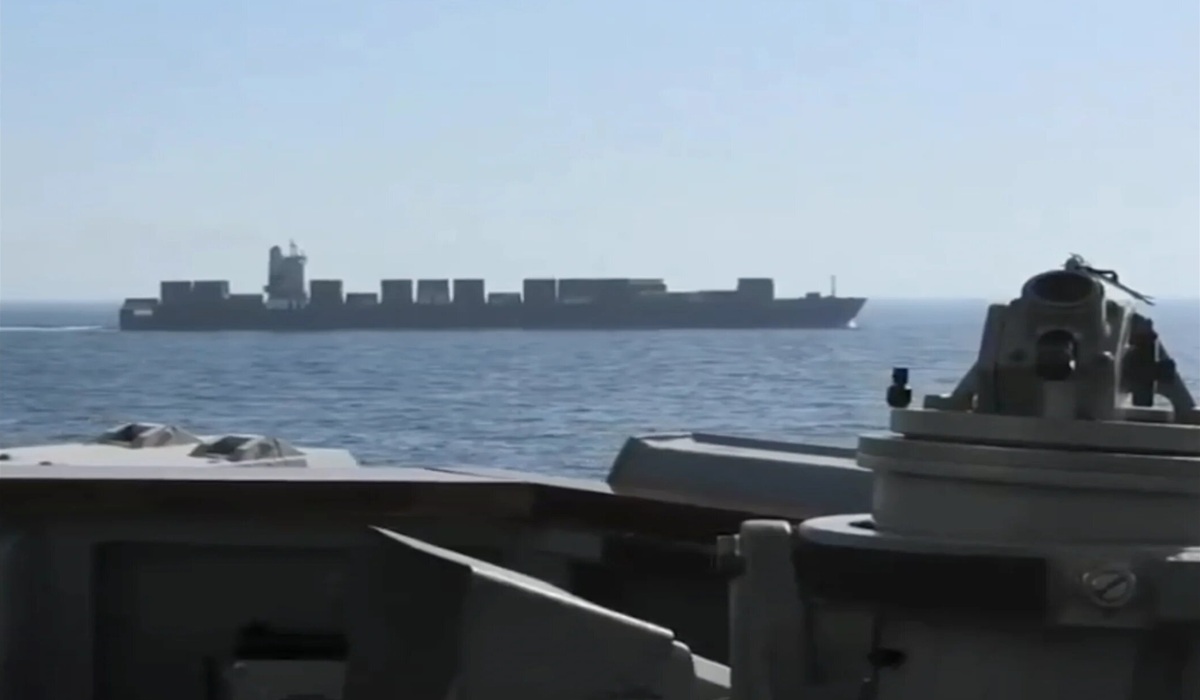
The naval dimension of this conflict has moved beyond mere skirmishes. The U.S. Navy’s blockade of the Strait of Hormuz is the most aggressive maritime intervention in recent history. On Sunday, U.S. Marines rappelled onto the M/V Touska, an Iranian-flagged cargo ship, after a six-hour standoff.
- Economic Fallout: Oil prices have jumped as traders price in the "de facto" closure of the Strait.
- China’s Entry: Beijing, usually a silent partner, has broken its neutrality. Foreign Ministry spokesman Guo Jiakun labeled the seizure "armed piracy," emphasizing that the ship was carrying Chinese cargo.
- The Saudi Factor: Chinese President Xi Jinping’s direct call to Saudi Crown Prince Mohammed bin Salman suggests that the East is looking to Riyadh to exert pressure on Washington to de-escalate.
Key Takeaways: The Current State of Play
- The Ceasefire Deadline: The current 14-day pause expires on Wednesday. Without a signed "Islamabad Accord," a return to active kinetic warfare is nearly certain.
- The "Pakistan Pivot": Islamabad is not just a host; Field Marshal Asim Munir is actively negotiating the lifting of the Hormuz blockade in exchange for Iranian presence at the table.
- The Nuclear Red Line: The U.S. demands total disarmament; Iran demands the right to domestic nuclear "achievements" and the preservation of its missile program.
- Human Cost: The eight-week conflict has already claimed thousands of lives across Iran and Lebanon, with Israeli forces currently maintaining a "no-go zone" in Southern Lebanon up to the Litani River.
Historical Resonance: The Shadow of 2015
To understand why Pezeshkian calls the current U.S. signals "contradictory," one must look at the "lateral" collapse of the 1994 Agreed Framework with North Korea. Much like that era, the current negotiations suffer from a "Commitment Gap." Tehran views the U.S. withdrawal from the 2015 deal as a permanent stain on American reliability. Trump’s strategy is to treat the 2015 deal as a "failed product" and the new deal as a "rebrand," but for the Iranian Revolutionary Guard and the Parliament (led by Mohammad Baqer Qalibaf), the stakes are existential, not transactional.
The Ripple Effect: Beyond the Gulf
The war has created the most severe shock to global energy supplies in history. While the S&P 500 has shown a resilient "war-low" rebound, the underlying volatility remains high. European allies are notably anxious. They fear a "swift, superficial deal" that provides Trump with a political win but lacks the technical rigor to prevent a nuclear breakout in 2027 or 2028.
Future Forecast: Three Scenarios
- The "Islamabad Breakthrough" (30% Probability): A limited, "freeze-for-freeze" agreement is signed. The U.S. lifts the blockade on specific ports, and Iran pauses enrichment at 60% while talks continue.
- The "Wednesday Collapse" (50% Probability): Negotiations fail in Pakistan. The ceasefire expires, and the U.S. initiates "Infrastructure Targeting," as threatened by Trump. Iran retaliates against Gulf desalination plants.
- The "Chinese Intervention" (20% Probability): Beijing offers a "Security Guarantee" to Iran, effectively daring the U.S. Navy to intercept more Chinese-linked cargo, leading to a broader US-China maritime standoff.
The 12-Month Outlook: A Fragile Peace or Total War?
The next year will not be defined by the text of the deal, but by its enforcement. If an agreement is signed in Islamabad today, the "Strategic Hurdle" shifts to verification. Trump’s insistence on "Regime Change" in his Truth Social posts creates a paradox: how can a regime negotiate its own replacement?
The challenge to the reader is to look past the headlines of "peace" and "deals." We are witnessing the birth of a new era of "Blockade Diplomacy." Even if the missiles stop flying on Wednesday, the economic and maritime precedent set in the Strait of Hormuz has fundamentally changed the rules of international trade. The world may be "proud" of a deal, but the cost of achieving it has already rewritten the geopolitical map of the 2020s.


Comments (0)
Leave a Comment