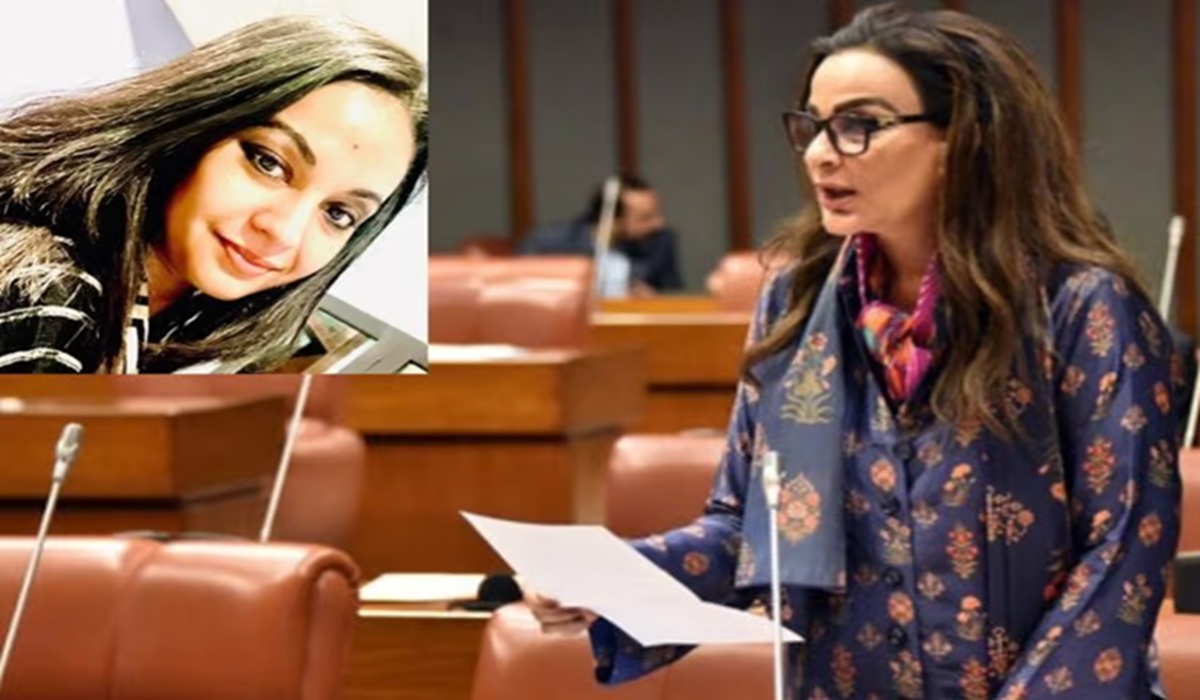
Marvi Malik, the daughter of Senator Sherry Rehman, has passed away following a sudden brain haemorrhage in Karachi. The untimely death of the young professional has triggered a wave of national mourning, crossing political lines to offer condolences to one of Pakistan’s most prominent stateswomen.
The news broke on the afternoon of March 22, 2026, leaving the country’s political and social circles in a state of profound shock. Marvi Khursheed Malik, known for her private yet impactful life away from the relentless glare of her mother’s political career, succumbed to complications after being rushed to a private hospital in Karachi. For Senator Sherry Rehman-a veteran diplomat, former Ambassador to the U.S., and a leading voice in climate activism-the loss is an unimaginable personal blow.
A Quiet Life of Substance
In an era where the children of high-profile politicians often dominate social media headlines, Marvi Malik was a distinct outlier. She maintained a dignified distance from the fray of partisan politics, focusing instead on her professional and creative pursuits. This separation made her sudden passing all the more jarring to a public that primarily knew her through the lens of her family’s legacy.
She was the daughter of Senator Rehman and Nadeem Hussain, a pioneer in Pakistan’s microfinance sector. Growing up in a household defined by intellectual rigor and public service, Marvi was shaped by an environment of high-stakes diplomacy and editorial excellence. Her mother’s transition from the editor-in-chief of The Herald to a global diplomat meant that Marvi’s upbringing was steeped in the narratives of Pakistan’s most transformative decades.
The Medical Crisis: Understanding the Sudden Shift
A brain haemorrhage-a type of stroke caused by a ruptured artery-is a medical emergency that strikes with terrifying speed. In the case of young adults, the condition is often linked to underlying vascular issues, such as arteriovenous malformations (AVM) or sudden spikes in blood pressure.
Medical professionals in Karachi noted that despite immediate intervention, the severity of the bleed proved insurmountable. This tragedy highlights a growing concern in the Pakistani healthcare landscape: the increasing incidence of non-communicable diseases and vascular emergencies in younger demographics. While the Rehman family has requested privacy during this time, the circumstances of Marvi’s death have reignited discussions about preventative neurological health.
The Human Cost of Public Life
When we cover the upper echelons of Islamabad’s power corridors, we often view political figures as resilient, almost indestructible entities. We see them in the Senate, at COP summits, and on nightly news bulletins, debating policy with a clinical detachment.
What the headlines don't say out loud is that these figures are parents first. I’ve observed Sherry Rehman over the years; she is a woman of immense composure and a formidable intellect. Seeing that composure met with the raw, universal grief of losing a child reminds us of the fragile human architecture beneath the political persona. The
 "Human Signal" here isn't just about the condolences on X (formerly Twitter) or the official statements from the Presidency-it's about the sudden, silent void left in a home that has spent years serving the public. There is a specific kind of silence that follows such a high-profile tragedy, where the machinery of state stops, if only for a moment, to acknowledge a mother’s pain.
National Response and Condolences
The response to Marvi’s passing was instantaneous and unified. President Asif Ali Zardari was among the first to express his "deep grief," describing the loss as a tragedy for the entire family. His message, shared via the Presidency’s official channels, emphasized the long-standing ties between the Zardari and Rehman families within the Pakistan Peoples Party (PPP).
Condolences poured in from across the aisle:
- Government Officials: Prime Minister Shehbaz Sharif and various federal ministers suspended political discourse to offer their sympathies.
- Opposition Leaders: Members of the PTI and other opposition groups shared messages of solidarity, proving that in moments of personal grief, the vitriol of Pakistani politics can, and should, take a backseat.
- The Diplomatic Corps: Having served as Ambassador to Washington, Sherry Rehman received messages from international diplomats who recalled her dedication to her country-now reflected back through the community's support for her family.
The Legacy of a Generation
The passing of Marvi Malik isn't just a news story for the 24-hour cycle; it is a moment that reflects the shared vulnerability of a generation. Senator Rehman has been a trailblazer for women in Pakistan, often sacrificing private time for the public good. To see such a family struck by a sudden medical catastrophe is a sobering reminder of the limits of influence and power.
Key Takeaways:
- The Victim: Marvi Khursheed Malik, daughter of Senator Sherry Rehman and Nadeem Hussain.
- Cause of Death: Complications following a sudden brain haemorrhage in Karachi.
- The Legacy: A young professional who chose a life of substance over public visibility.
- National Unity: A rare moment where Pakistan's polarized political landscape united in empathy.
The Rehman Family’s Public Service
To understand the weight of this loss, one must look at the lineage. Sherry Rehman was born into a family of Sindhi intellectuals. Her father was a lawyer, and her mother was the first female vice president of the State Bank of Pakistan. This tradition of breaking glass ceilings and serving the state has been the Rehman family’s hallmark for three generations.
Marvi was the quiet torchbearer of this legacy. Her death at such a young age leaves a gap in a lineage that has consistently contributed to the intellectual and political growth of Pakistan. As the family prepares for the final rites, the nation watches not as a collection of voters or critics, but as a community sharing in a mother’s mourning.




Comments (0)
Leave a Comment