A calibrated diplomatic shift in Tehran signals a new era of Eurasian integration, as Iran balances U.S. backchannels with a hardening Kremlin alliance.
The Pulse Summary
Iranian President Masoud Pezeshkian’s strategic briefing to Vladimir Putin regarding secret U.S. negotiations marks a critical inflection point in Middle Eastern geopolitics. This synchronization of Persian-Russian interests suggests a move beyond tactical cooperation into a formalized, long-term security architecture designed to bypass Western sanctions and reshape the Global South’s financial landscape.
The Architecture of a Strategic Briefing
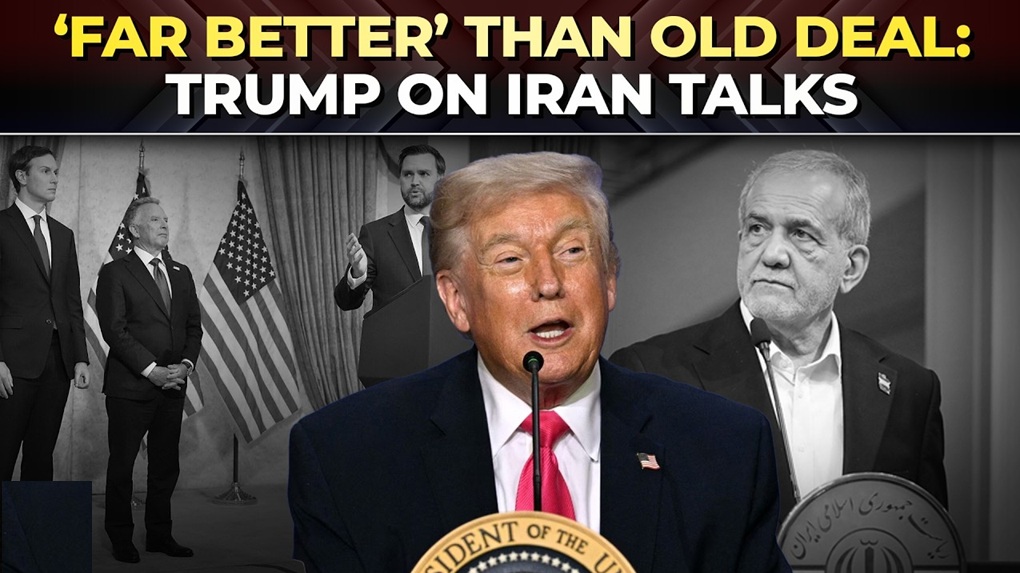
The recent phone call between Masoud Pezeshkian and Vladimir Putin wasn't merely a courtesy of statecraft; it was a demonstration of the "Eurasian Fortress" strategy in real-time. By conveying the nuances of Iran’s assessments regarding talks with Washington directly to the Kremlin, Pezeshkian has effectively signaled that Tehran’s "New Chapter" of engagement with the West will not be written at the expense of its Northern neighbor.
This is a departure from the Rouhani era, where Western engagement often felt like a pendulum swinging away from Moscow. Pezeshkian, despite his perceived "reformist" or "pragmatist" label, is operating under a mandate where the "Turn to the East" is no longer a choice-it is the bedrock. The information exchange underscores a sophisticated level of trust, suggesting that Tehran views its negotiations with the U.S. not as a path to reconciliation, but as a mechanism for risk management while it doubles down on the International North-South Transport Corridor (INSTC).
Information Gain: The "Silicon Curtains" and Economic Defiance
To understand this call, we must look beyond the immediate headlines of nuclear deals or regional proxies. We are witnessing the construction of what could be called a "Parallel International Order." While the world watches the Strait of Hormuz, the real action is happening in the integration of the Mir and Shetab payment systems.
Iran and Russia are currently beta-testing a financial ecosystem that operates entirely outside the SWIFT network. This isn't just about avoiding sanctions; it’s about creating a blueprint for other BRICS+ nations. When Pezeshkian briefs Putin on U.S. talks, he is likely discussing the "price of admission" for regional stability-specifically, what concessions Washington is willing to make on frozen assets and how that liquidity might be funneled into joint Russo-Iranian energy projects.
The Friction of Pragmatism
In analyzing the diplomatic cables and state-run media outputs from both IRNA and TASS, a "hidden friction" emerges that most analysts overlook: the Domestic Legitimacy Gap.
Pezeshkian is walking a razor-thin wire. To stabilize a crippled economy, he needs the lifting of sanctions that only a deal with the West can provide. However, to maintain the support of the IRGC (Islamic Revolutionary Guard Corps) and the Supreme Leader’s office, he must prove that Iran is not a "supplicant" to Western interests.
The call to Putin serves as a domestic insurance policy. It tells the hardliners in Tehran: "We are talking to the Americans, but we are strategizing with our allies." This is the "Human Signal" in the data-the realization that Pezeshkian’s outreach to the U.S.
 is a tactical maneuver within a broader pro-Russia grand strategy. There is a palpable skepticism in Moscow regarding how much Tehran can actually "pivot" given the deep-seated mistrust of the U.S. following the JCPOA withdrawal in 2018.
The New Geopolitics of Energy and Attrition
The synergy between these two nations has evolved from a buyer-seller relationship into a shared military-industrial complex. The "Shahed Diplomacy" that characterized the early stages of the Ukraine conflict has matured. We are now seeing reports of localized production facilities and joint research into hypersonic technologies.
This relationship is also fundamentally altering the energy markets. By coordinating their positions, Moscow and Tehran are effectively controlling a massive portion of the world's natural gas reserves. This "Gas OPEC" ambition remains a quiet but looming threat to EU energy security in the long term. When Pezeshkian discusses U.S. talks with Putin, the subtext is often the "stabilization" of energy prices in a way that continues to fund their respective state machineries despite Western price caps.
Key Takeaways: The Tehran-Moscow Axis
- Synchronized Diplomacy: Tehran no longer negotiates with the West in a vacuum; every move is cross-referenced with Kremlin strategic interests.
- Institutional Integration: The focus has shifted from military hardware to financial infrastructure (Mir/Shetab) and logistics (INSTC).
- Sanction Immunity: Both nations are leveraging their pariah status to build a "closed-loop" economy that is increasingly resistant to U.S. Treasury pressure.
- The "Pezeshkian Doctrine": Pragmatic engagement with the West as a tool for economic breathing room, while maintaining a strategic core aligned with the East.
The 1941 Echo
In 1941, the Anglo-Soviet invasion of Iran was a move to secure the "Persian Corridor" to supply the USSR against Nazi Germany. Today, the roles have reversed, but the geography remains destiny. Iran is once again the "Bridge of Victory," but this time, it is a bridge that Moscow and Tehran are building themselves to bypass the maritime dominance of the West. This historical rhyme reminds us that whenever Russia feels besieged from the West, its survival depends on its southern access through the Iranian plateau.
The Socio-Economic Ripple Effects
For the average citizen in Tehran or Moscow, this high-level statecraft translates to a slow but steady decoupling from Western consumerism. The "replacement economy" is in full swing. We see Russian automotive parts flowing into Iran, and Iranian food exports filling Russian grocery shelves. This isn't just a government-to-government alliance; it is a forced integration of two massive consumer markets. The "Western Brand" is being systematically replaced by "Eurasian Alternatives," creating a cultural shift that may take decades to reverse, regardless of future political leadership.
Future Forecast: The 2026 Collision Course
As we look toward the next fiscal cycle, expect to see the following:
- Formalized Defense Pact: A possible signing of a 20-year comprehensive strategic partnership, similar to the Iran-China agreement but with deeper military integration.
- Caspian Sea Militarization: Increased joint naval drills to ensure that no external actors (NATO or otherwise) can exert influence in the region.
- Digital Sovereign Currency: A pilot program for a cross-border digital currency (CBDC) to further insulate trade from the US Dollar.
The 12-Month Outlook: The Next Strategic Hurdle
The primary challenge for this alliance in the coming year is the "China Factor." While Russia and Iran are tightening their bond, they both remain junior partners to Beijing’s economic gravity. The hurdle will be managing China’s reluctance to be "dragged" into a hard-security alliance that could jeopardize its trade with the U.S. and Europe.
For Pezeshkian, the challenge is even more immediate: he must deliver tangible economic relief to a young, restless population. If the talks with the U.S. (which he briefed Putin on) do not result in the lifting of key sanctions, the "Turn to the East" will be seen by the Iranian public not as a strategic triumph, but as a desperate necessity. The next year will determine if the Tehran-Moscow pivot is a launchpad for a new superpower bloc or merely a bunker for two nations under siege.
The question for the West is no longer how to isolate Iran, but how to respond to an Iran that has found its most formidable partner in history.



Comments (0)
Leave a Comment