Pulse Summary: Geopolitical stability fractured today as the Trump administration’s renewed pursuit of Greenland sparked a historic rift with NATO allies. Simultaneously, escalating tensions with Iran have reached a fever pitch, creating a dual-front crisis that challenges the foundational security architecture of the Western world.
The post-Cold War era didn't just end today; it was dismantled. For decades, the North Atlantic Treaty Organization (NATO) operated on a bedrock of predictable diplomacy and collective defense. That bedrock is now a fault line. The intersection of a renewed American bid for Greenland and the deepening shadow of a kinetic conflict with Iran has forced a reckoning that Brussels and Washington can no longer ignore.
The Arctic Gambit: Why Greenland Matters Now
The sudden diplomatic freeze between Washington and Copenhagen isn't merely about real estate. It is about the "High North" and the control of the next century's most critical maritime routes. As polar ice retreats, the Northwest Passage and the Northern Sea Route are transitioning from theoretical shortcuts to active economic arteries.
Greenland sits at the center of this transition. By reigniting the conversation around Greenland’s sovereignty, the Trump administration is signaling a shift toward "Transactional Geopolitics." This isn't just about the Thule Air Base or the vast, untapped deposits of rare earth elements like neodymium and praseodymium. It is about denying China a foothold in the Arctic-a "Polar Silk Road" that Beijing has been quietly cultivating through infrastructure investments.
However, the cost of this pursuit is a total breakdown in trust with the Nordic Council. Denmark’s swift dismissal of the proposal has transitioned from a diplomatic "no" to a fundamental questioning of the U.S. commitment to sovereign boundaries within the alliance.
The Iranian Theater: Beyond the Rhetoric
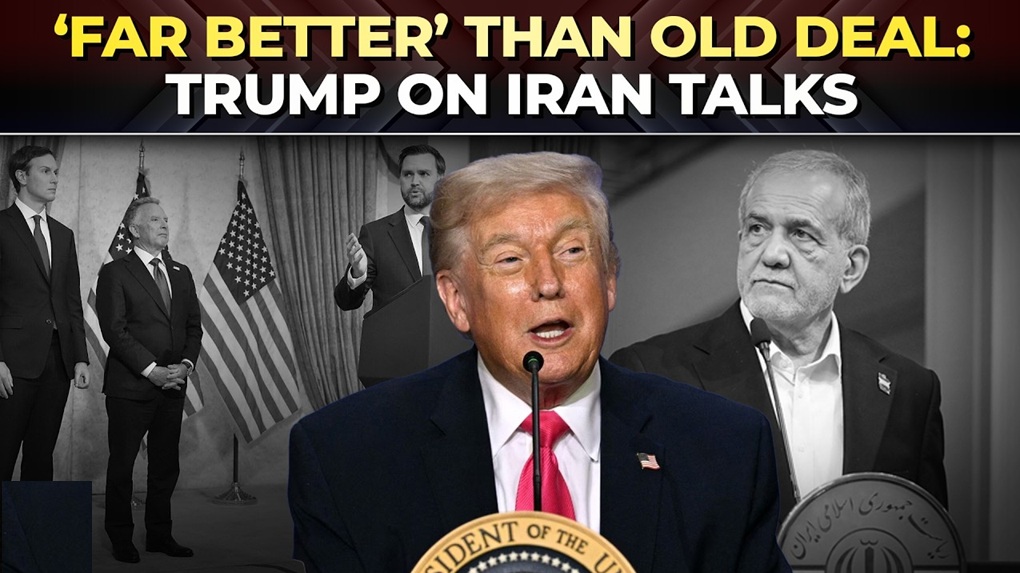
While the Arctic heats up, the Middle East is approaching a boiling point. The current friction with Iran has moved beyond the traditional cycle of sanctions and "maximum pressure." We are seeing a strategic convergence of cyber-warfare, maritime interdictions in the Strait of Hormuz, and a hardening of proxy lines in Lebanon and Yemen.
Unlike previous escalations, the current rift is defined by a lack of backchannels.
 In 2015, the JCPOA-regardless of its flaws-provided a communicative framework. Today, that framework is replaced by a void. Intelligence reports suggest that Iran’s breakout time for weapons-grade uranium has shrunk to a window that can no longer be closed by diplomacy alone. This "red line" is no longer a metaphor; it is a tactical reality that is driving the U.S. closer to a preemptive posture.
The Silicon and Soil Friction
In analyzing these maneuvers, we often overlook a hidden friction point: the decoupling of Western defense contractors from their European counterparts. While headlines focus on the "Greenland Purchase," the actual movement is happening in the procurement offices.
We are seeing a quiet but aggressive "Americanization" of defense tech that is alienating European firms like BAE Systems and Leonardo. When the U.S. pushes for territorial expansion or unilateral military action in Iran, it isn't just a policy shift-it's a market signal. The assumption that NATO allies will follow the U.S. into a high-intensity conflict with Iran is a dangerous oversimplification. European capitals are increasingly viewing American "strategic autonomy" as "strategic isolation." In my discussions with policy analysts in Berlin, the sentiment is clear: they are no longer preparing for a shared future; they are preparing for a contingency where the U.S. is a competitor, not a protector.
The Historical Mirror: 1946 vs. 2026
To understand the Greenland obsession, we must look back to 1946. Following World War II, the Truman administration offered Denmark $100 million in gold for the island. The logic then was simple: prevent Soviet bombers from crossing the pole.
Today, the threat is more complex. It is a "Three-Body Problem" involving the U.S., Russia, and China. Russia has spent the last decade re-opening over 50 Soviet-era military outposts in the Arctic. China, calling itself a "Near-Arctic State," is desperate for the mineral wealth locked beneath Greenland’s ice sheet. The U.S. move isn't an eccentricity of the current administration; it is a desperate, late-stage attempt to reclaim a strategic buffer that was neglected for thirty years.
Key Takeaways for Global Markets:
- Defense Re-allocation: Expect a massive surge in Arctic-capable naval tech and satellite monitoring systems.
- Energy Volatility: The Iran rift guarantees a "Geopolitical Risk Premium" on Brent Crude for the foreseeable 12-month window.
- Diplomatic Fragmentation: The "Unified West" is being replaced by a series of bilateral "Micro-Alliances."
- Commodity Sovereignty: Greenland’s rare earth potential is now a matter of national security, not just mining economics.
The NATO Paradox: Membership without Alignment
The rift has exposed a structural flaw in NATO: the organization was designed to counter a singular, static threat from the East. It was not built to handle an era where its most powerful member seeks territorial acquisition from another member.
The European response has been a pivot toward PESCO (Permanent Structured Cooperation) and other EU-centric defense frameworks. France, in particular, has seized this moment to argue that Europe can no longer outsource its security to a "mercurial Washington." The Greenland dispute provides the perfect narrative fuel for this fire. If the U.S. views a NATO ally’s territory as "negotiable," then the Article 5 guarantee-the "all for one" clause-becomes psychologically void.
The Iran Capability Gap
What the numbers don't say about the Iran conflict is the disparity between "capacity" and "will." While the U.S. maintains a staggering kinetic advantage, the Iranian "Grey Zone" capabilities-asymmetric drone swarms and decentralized cyber units-are designed to make a traditional victory impossible.
Data from recent Gulf exercises shows that the cost-to-kill ratio for intercepting low-cost Iranian munitions is becoming unsustainable for Western navies. Each $2,000 drone requires a $2 million interceptor missile. In a prolonged war of attrition, the economic math favors Tehran, regardless of the destruction of their conventional infrastructure.
The Next Strategic Hurdle: 12-Month Outlook
Over the next year, the "Greenland Rift" will likely morph into a trade dispute. Expect the U.S. to use tariffs or tech-export restrictions as leverage against Denmark and the broader EU to secure mining concessions.
In Iran, the "Strategic Hurdle" is the inevitable collapse of the NPT (Non-Proliferation Treaty) framework. As Tehran nears the threshold, the U.S. will face a binary choice: accept a nuclear Iran or initiate a regional war that could disrupt 20% of the world's oil supply. There is no middle path left.
The challenge for the reader is to stop viewing these as two separate stories. The Arctic and the Persian Gulf are the two bookends of a new American foreign policy that prioritizes "Strategic Tangibles"-land, minerals, and direct containment-over "Strategic Ideals" like alliance cohesion and international law. We are moving into a "Vantablack" era of diplomacy: where the old rules of engagement don't just bend; they disappear.




Comments (0)
Leave a Comment