Vladimir Putin’s high-stakes alliance with Tehran has evolved from a tactical drone partnership into a comprehensive strategic reality. As US-Israeli strikes target Iranian infrastructure, Moscow’s decision to provide real-time intelligence and satellite targeting data marks the most significant escalation in the Kremlin’s Middle Eastern policy in decades.
The geopolitical architecture of the 21st century is being rewritten in the smoke over Tehran and Isfahan. For years, analysts debated whether the Russia-Iran relationship was a "marriage of convenience" or a durable axis. By March 2026, that debate has been settled by the cold logic of survival. As the United States and Israel engage in what has become a high-intensity conflict with the Islamic Republic, Russia has moved beyond diplomatic platitudes, positioning itself as the "silent partner" in Iran’s precision-strike kill chain.
This isn't just about the 20-year Comprehensive Strategic Partnership Treaty signed in early 2025. It is about a fundamental shift in how Moscow views its role as a global spoiler. Faced with its own grueling war in Ukraine, the Kremlin has realized that a devastated Iran is a strategic liability, but an embattled, Russian-backed Iran is a powerful lever against Western interests.
The Intelligence Pipeline: Russia’s Invisible Hand
The most critical development in the 2026 conflict is not the hardware being exchanged, but the data. While the "Shahed" drone remains a staple of the battlefield, the primary Russian contribution is now "overhead surveillance."
Reports from senior intelligence officials indicate that Moscow is sharing high-resolution satellite imagery and electronic warfare (EW) signatures with the IRGC. This intelligence allows Iranian missile units to track US carrier strike groups and regional assets with a precision that was previously impossible for Tehran.
The transfer of the Kanopus-V satellite system-rebranded under Iranian operational control-has provided the "nervous system" for the regime’s defense. By narrowing the gap between detection and engagement, Russia has effectively neutralized much of the traditional stealth advantage held by Western forces in the Gulf.
Inside the Data: The "Guns for Butter" Gamble
When I look at the Russian federal budget for 2026, the numbers reveal a startling irony. Heading into this year, the Kremlin was facing a fiscal cliff. Western sanctions on Rosneft and Lukoil had finally begun to bite, and Moscow was staring at 10% cuts to non-military spending.
Then, the Strait of Hormuz closed.
The resulting spike in Brent crude-now hovering near $100 a barrel-has effectively bailed out the Russian economy. Every $10 increase in the price of oil adds roughly $1.6 billion to Putin's monthly coffers. From a purely cynical perspective, Russia is the only major power that benefits from a protracted, low-level war in the Middle East. It provides the liquidity Putin needs to sustain the Ukraine front without triggering domestic unrest. We aren't just seeing a military alliance; we are seeing
 a "Conflict Economy" where the destabilization of the Gulf acts as a direct subsidy for the Russian war machine.
The Mojtaba Khamenei Transition: A New Direct Line
The sudden transition of power in Tehran following the death of Ali Khamenei has created a new, more pragmatic channel between the Kremlin and the Office of the Supreme Leader. Vladimir Putin was among the first global leaders to recognize Mojtaba Khamenei, describing his father’s death as a "cynical murder" and signaling total solidarity with the new leadership.
Unlike the ideological rigidity of the previous era, the new Iranian leadership appears more willing to trade sovereignty for security. This has manifested in:
- The Rasht-Astara Link: Russia has committed $1.6 billion in loans to complete this missing rail link, which serves as the spine of the International North-South Transport Corridor (INSTC).
- The Hormuz Nuclear Deal: A $25 billion agreement to build a new nuclear power plant, deepening Iran's dependence on Russian technical expertise for decades to come.
- The Su-35 Delivery: Long-delayed fighter jets are finally appearing on Iranian tarmacs, providing a much-needed boost to Tehran’s aging air force.
The Historical Context of the "Great Pivot"
To understand the gravity of this shift, one must look back at the 2001 treaty between these two nations. That document was filled with aspirational language but lacked any real teeth. It was a "paper alliance."
The 2025-2026 era is different. For the first time, Russia is viewing Iran not as a client state, but as a peer-adversary of the West that can be utilized to overextend US resources. If Washington is forced to deploy ground troops or massive naval assets to the Middle East, that is one less brigade or carrier available for the European or Indo-Pacific theaters. This "Strategic Distraction" is the cornerstone of Putin’s 2026 doctrine.
The New Geopolitical Reality
- Data Over Drones: The real Russian support is in intelligence sharing and satellite targeting, which erodes the US technological edge.
- Fiscal Windfall: Higher oil prices caused by Middle Eastern instability are funding Russia’s ongoing operations in Ukraine.
- The INSTC Priority: Moscow is fast-tracking trade routes that bypass the Suez Canal and Western sanctions entirely.
- Limited Liability: Despite the rhetoric, the alliance still stops short of a mutual defense pact (Article 5 style), allowing Putin to dial support up or down based on his dealings with Washington.
What’s Next?
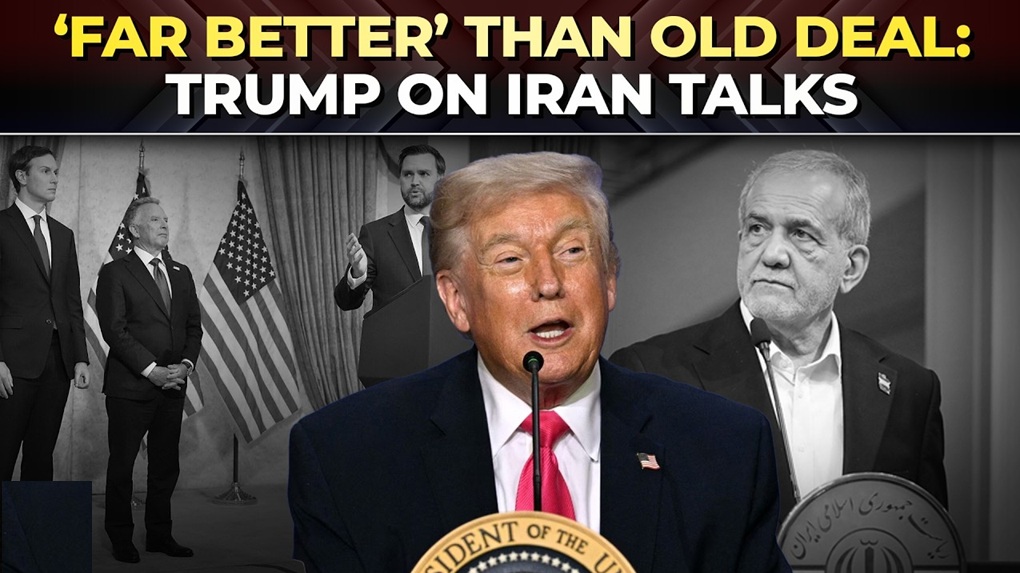
The conflict is currently in a "war of signals." Russia is testing how much intelligence it can provide before the US considers it a co-belligerent. Meanwhile, the Trump administration’s "Maximum Pressure 2.0" is forcing Tehran into an even tighter embrace with Moscow.
As construction on the Rasht-Astara railway begins in early 2026, the physical integration of these two pariah economies will be complete. We are no longer looking at a temporary partnership; we are witnessing the birth of a permanent, anti-Western bloc that stretches from the Baltic to the Persian Gulf.



Comments (0)
Leave a Comment