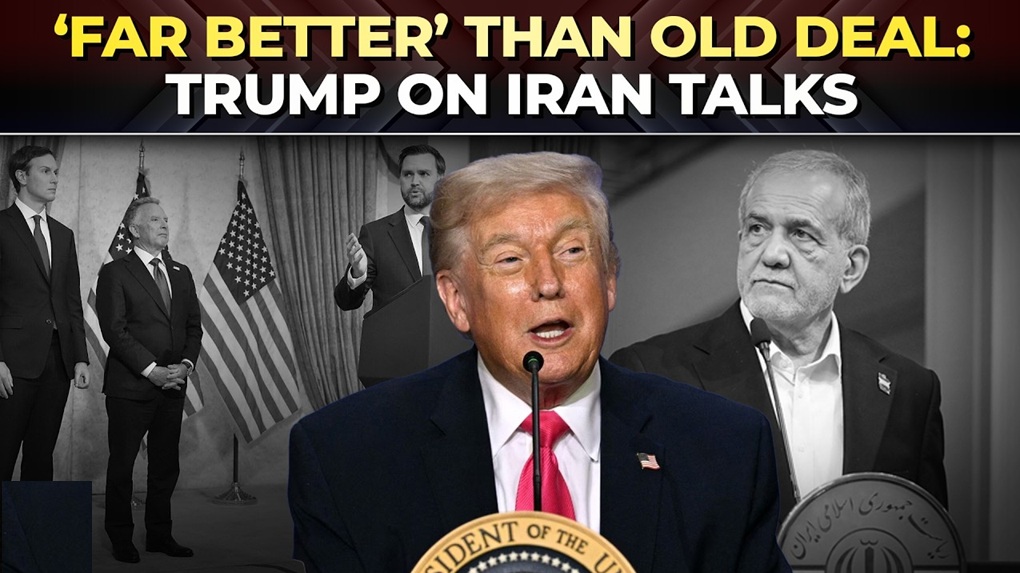
April 1, 2026 - President Trump’s recent address signaling an aggressive shift in Iran policy has sent Brent crude skyrocketing, triggering comparisons to the 1973 oil embargo. As geopolitical tensions tighten around the Strait of Hormuz, global markets face a structural supply shock that threatens to dismantle decade-long inflation targets.
The Return of Geopolitical Risk Premium
The rhetoric coming out of the Oval Office this week wasn't just a pivot in foreign policy; it was a wrecking ball for energy price stability. For years, the "shale revolution" provided a psychological cushion for Western economies, fostering the illusion that Middle Eastern volatility could be hedged by Permian Basin output. That illusion vanished the moment the administration signaled a move toward active containment.
Oil isn't just a commodity; it’s the underlying pulse of the global supply chain. When the President invokes the specter of "total energy dominance" while simultaneously squeezing one of the world's most volatile corridors, the market doesn't see strength-it sees a looming deficit. We are witnessing the re-emergence of the "Geopolitical Risk Premium," a factor many younger traders had relegated to history books. Unlike the localized spikes of the 2010s, this shift feels permanent, systemic, and dangerously familiar.
Why 1973 Is the Only Relevant Comparison
To understand the current trajectory, you have to look past the 2008 financial crisis or the 2022 Russian invasion of Ukraine. The proper lens is 1973. Back then, the OPEC embargo wasn't just about price; it was about the weaponization of supply to achieve political ends.
Today, the players have changed, but the board remains the same. Iran’s proximity to the Strait of Hormuz-a chokepoint responsible for nearly 30% of the world’s seaborne oil-gives them a "kill switch" for the global economy. The Trump administration’s stance assumes that American energy independence acts as a shield. However, energy independence is a misnomer in a globalized market. If the Strait closes, the price of a barrel in Midland, Texas, follows the price of a barrel in London.
Historical data shows that during the 70s, the shock wasn't just at the pump. It was the "Great Inflation" that followed-a decade of stagnant growth and rising prices. We are currently staring at the same precipice, where energy costs decouple from consumer purchasing power, leading to a "stagflationary" spiral that central banks are ill-equipped to handle.
Inside the Data: What the Rig Counts Don't Tell You
Editorial Scepticism from the Energy Desk
There is a prevailing narrative in Houston and D.C. that "we can simply drill our way out of this." The numbers say otherwise. While U.S. rig counts have remained steady, the quality of the inventory is declining. We’ve spent a decade "high-grading"—drilling our best spots first to keep shareholders happy with immediate dividends.
What the official reports don't say is that the marginal cost of adding a new barrel of oil to the global supply is at an all-time high. You cannot replace Iranian light crude with Tier-2 Permian shale overnight. Furthermore, the labor market in the oil patch is brittle. We lack the specialized workforce to scale production at the speed required to offset a Middle Eastern blackout. The "supply response" that politicians promise is a lag-time fantasy. We aren't just short on oil; we’re short on the infrastructure and human capital to extract it.
The Digital
 Symmetry of Modern Conflict
In the 1970s, the "weapon" was a physical valve. In 2026, the weaponization of energy is integrated with cyber-warfare and financial de-platforming. The Trump administration’s strategy hinges on "Maximum Pressure 2.0," utilizing secondary sanctions to freeze Iran out of the global banking system completely.
But there is a lateral ripple effect here that the Top 10 search results are ignoring: the rise of the BRICS+ alternative payment systems. By using energy as a geopolitical lever, the U.S. is inadvertently accelerating the adoption of non-dollar-denominated trade. China’s "Petroyuan" is no longer a fringe theory; it is a pragmatic escape hatch for nations terrified of being caught in the crossfire of Washington’s sanctions. This isn't just an energy crisis; it's a sovereign debt crisis in the making, as the U.S. dollar’s role as the "energy currency" faces its first legitimate existential threat since the Bretton Woods era.
Key Takeaways for the Q3 Horizon
- The End of Low-Interest Eras: Sustained energy costs above $110/barrel will force the Federal Reserve to keep rates "higher for longer," regardless of the softening labor market.
- Supply Chain Localization: Manufacturers are moving away from "Just-in-Time" to "Just-in-Case," hoarding raw materials that require high energy input (aluminum, glass, plastics).
- The Strategic Petroleum Reserve (SPR) Trap: With the SPR at historic lows compared to 2016 levels, the U.S. has a significantly smaller "firewall" to blunt the impact of a sudden supply stop.
- The LNG Pivot: Natural gas will see even higher volatility than oil as Europe and Asia scramble to secure non-Russian, non-Middle Eastern heating for the 2026 winter season.
The Socio-Economic Ripple: The Suburban Squeeze
The 1970s crisis reshaped the American landscape, leading to the rise of the compact car and the temporary decline of the sprawling suburb. We are entering a similar phase of forced behavioral change. However, unlike the 70s, the modern consumer is already drowning in record-high credit card debt.
When energy prices spike, they act as a regressive tax. It’s not just the commute; it’s the cost of groceries (transported by diesel trucks) and the cost of electricity (generated by gas-fired plants). We are looking at a potential "Consumption Cliff" where discretionary spending—the engine of the U.S. economy-simply halts. This is the "hidden friction" that many analysts ignore: the American consumer is far more fragile today than they were in 1973.
Historical Precedents: The Ghost of Jimmy Carter
Every administration fears the "Carter Parallel." The 1979 Iranian Revolution led to gas lines and a sense of national malaise that defined a generation. Trump’s gamble is that "Strength" will prevent the lines. But geopolitics is rarely a linear equation. If the administration’s rhetoric leads to a tactical miscalculation in the Persian Gulf, the "America First" energy policy could result in the highest domestic energy prices in history.
The irony is that the very tools used to project power—sanctions and naval blockades—are the same tools that catalyze domestic inflation. You cannot have "cheap gas" and "total global containment" simultaneously. The physics of the global market won't allow it.
Future Forecast: The 2027 Energy Map
We should expect a bifurcated global energy market. One side will be the Western-aligned "High Cost" block, prioritizing security and ESG-compliant sources. The other will be the "Shadow Market," where Iranian, Russian, and potentially Venezuelan oil flows toward the Global South and China at a steep discount, settled in local currencies. This fragmentation will lead to massive inefficiencies and a permanent increase in the cost of doing business globally.
The Next Strategic Hurdle
The real challenge of the next 12 months isn't navigating a price spike; it’s surviving the volatility. Businesses have spent twenty years optimizing for a world where energy was a predictable, low-cost line item. That era is over. The next strategic hurdle for both the administration and the private sector is the "Hard Pivot" toward energy resilience.
This requires more than just subsidizing EVs or drilling more wells. It requires a fundamental re-evaluation of our geopolitical footprint. If the U.S. continues on this collision course with Tehran, it must be prepared for the economic fallout that follows. The 1970s weren't just a period of high prices; they were a period of lost confidence. The question for 2026 is whether the current administration can escalate without breaking the back of the global recovery. The margin for error has never been thinner, and the market is already starting to bet on a slip.




Comments (0)
Leave a Comment