Tensions in the Strait of Hormuz and evolving US-Iran relations are forcing New Delhi to recalibrate its energy security. As crude volatility spikes, India is shifting from traditional Iranian ties toward a diversified, high-stakes procurement strategy to shield its domestic economy from Middle Eastern instability.
The geopolitical equilibrium of the energy market has hit a friction point. For decades, India’s proximity to Iranian oil fields offered a logistical and economic advantage that seemed unshakable. Today, that relationship is being tested not just by the threat of renewed US sanctions, but by the physical vulnerability of the Strait of Hormuz—a narrow chokepoint where 20% of the world’s oil passes daily. When Tehran and Washington trade threats, the ripple effects are felt instantly in the refineries of Jamnagar and the petrol pumps of Mumbai.
The Logistics of Volatility: Beyond the Price Per Barrel
Global oil markets often focus on the "Brent Crude" ticker, but for India, the real metric is "Landed Cost Stability." Iran has historically offered New Delhi favorable credit terms and rupee-based payment mechanisms, providing a hedge against dollar fluctuations. However, the logistical risk premium is rising.
The Strait of Hormuz is only 21 miles wide at its narrowest point. Any kinetic conflict or naval blockade here doesn't just raise prices; it halts the physical flow of molecules. For an economy like India’s, which imports over 85% of its crude requirements, a week-long disruption in the Strait is not a market "correction"-it is a national security emergency.
New Delhi is now forced to play a sophisticated game of multi-alignment. While the Ministry of External Affairs maintains diplomatic channels with Tehran to secure the Chabahar Port-a vital gateway to Central Asia-the Ministry of Petroleum is quietly shopping elsewhere. This isn't just about finding more oil; it’s about finding oil that doesn't have to pass through a potential war zone.
The Russia-Guyana Pivot: A Structural Shift
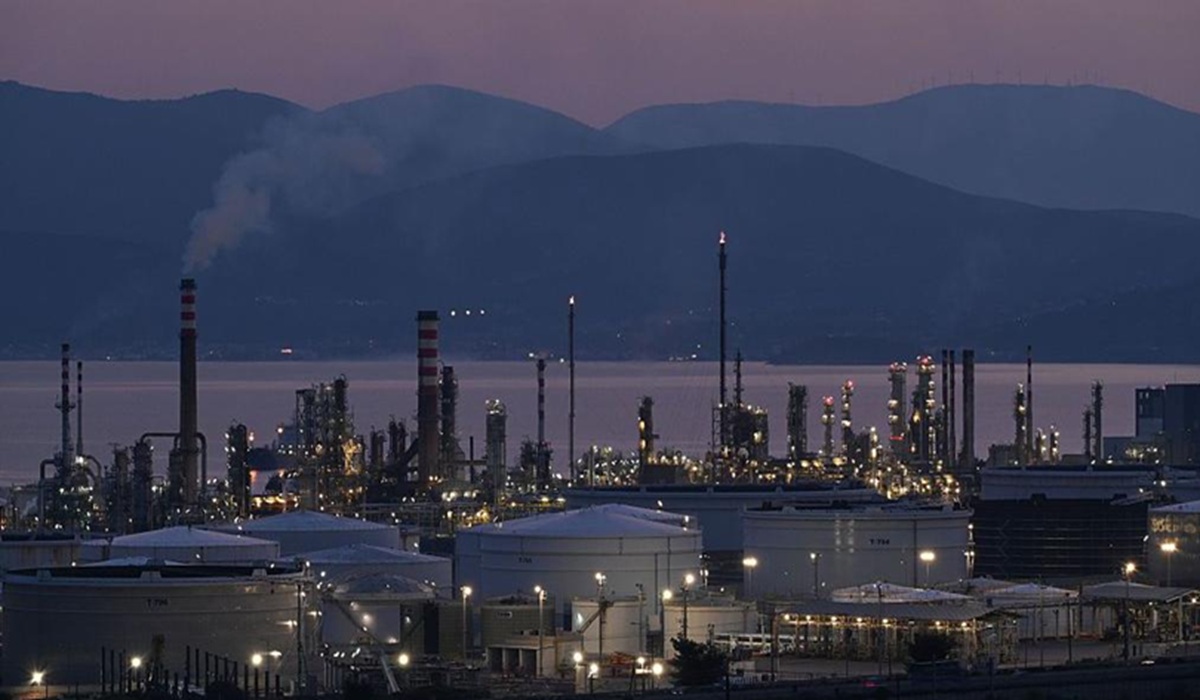
The most significant "Information Gain" in current energy analysis is the speed at which India has institutionalized its shift toward Russian and Western Hemisphere crude. While the world watched the diplomatic fallout of the Ukraine conflict, India’s refiners, such as Reliance Industries and Indian Oil Corp (IOC), reconfigured their "coker" units to handle various grades of sour and heavy crude.
This technical flexibility allowed India to absorb Russian Urals when they were discounted, but the long-term strategy is even more ambitious. India is now eyeing the emerging Guyana-Suriname basin and increasing off-take agreements with US shale producers.
The New Energy Doctrine
- Diversification as Defense: India is reducing its dependence on any single geography, specifically targeting non-OPEC+ sources to gain pricing leverage.
- Infrastructure
Resilience: Massive investment in Strategic Petroleum Reserves (SPR) to provide a 90-day cushion against Hormuz-related supply shocks.

- The Rupee-Rial Complexity: Moving away from the US dollar for oil remains a priority, though secondary sanctions make this a minefield for Indian banking institutions.
- Refinery Agility: Indian state-run refiners are upgrading technology to process "opportunity crudes"—cheaper, lower-quality oil that others can't use.
The Hidden Friction of "Cheap" Oil
There is a common industry assumption that India can simply "buy the discount" whenever sanctions or conflict arise. However, the data reveals a hidden friction point: Insurance and Freight (C&F).
During periods of high tension in the Strait of Hormuz, "War Risk" insurance premiums for tankers skyrocket. In some cases, the cost of insuring a VLCC (Very Large Crude Carrier) can offset the entire discount offered by the seller. Furthermore, many global shipping fleets are wary of "dark fleet" associations. If a vessel has previously touched Iranian ports, it risks being blacklisted by Western insurers, leaving Indian refiners with a shrinking pool of available hulls.
We see a growing divide between state-run refiners and private giants. While private entities can move with the speed of a hedge fund to secure spot cargoes, state-run firms are bogged down by tender processes that are often too slow for a market moving on "breaking news" tweets and naval maneuvers.
The Historical Mirror: 1990 vs. 2026
To understand India’s current urgency, one must look back at the 1990 Gulf War. At that time, India had such thin reserves and such a rigid supply chain that it nearly defaulted on its sovereign debt as oil prices surged.
The 2026 landscape is different. India is no longer a passive observer; it is the world’s third-largest energy consumer. The move to engage with Iran today is less about "needing" Iranian barrels and more about maintaining a presence in the Persian Gulf to balance the influence of other regional powers. The energy trade is now a tool of maritime statecraft.
Socio-Economic Ripple Effects
High oil prices are the ultimate "silent tax" on the Indian middle class. Because fuel costs are baked into the logistics of everything from tomatoes to Amazon deliveries, a $10 jump in crude can trigger a 0.5% spike in headline inflation.
The government’s push for "Green Hydrogen" and EV adoption is often framed as an environmental goal, but in the context of the Iran-Hormuz tension, it is purely a de-risking strategy. Every megawatt generated by domestic solar is one less drop of oil that has to run the gauntlet of the Middle East's naval chokepoints.
Future Forecast: The 2027 Energy Landscape
- The Rise of the "Middle Corridor": Expect India to accelerate pipeline projects that bypass the most volatile water in the Gulf, though terrestrial routes carry their own set of transit-fee risks.
- The Sanctions "Cat and Mouse": As US elections loom, the enforcement of Iranian oil sanctions will fluctuate. India will likely use this window to fill its SPRs to capacity.
- Refinery Specialization: By 2027, Indian refineries will likely be the most "flexible" on earth, capable of switching between 15+ different crude grades within a 24-hour window to capitalize on geopolitical price dislocations.
The 12-Month Outlook: The Next Strategic Hurdle
Over the next year, the primary challenge for India will not be the availability of oil, but the financing of it. As the global financial system becomes increasingly fragmented, the "Bifurcation of the Barrel" will accelerate. India will have to choose: stay within the dollar-denominated "clean" market or build a parallel financial infrastructure to handle "sanctioned" but cheap energy.
The current strategy of "strategic ambiguity"-buying from everyone while committing to no one-is reaching its limit. With the Strait of Hormuz remaining a hair-trigger flashpoint, New Delhi's ability to maintain its breakneck economic growth depends entirely on whether it can decouple its energy security from the volatility of a single 21-mile stretch of water. The question for 2027 is no longer how much oil India needs, but how far it is willing to go to bypass the ghosts of its energy past.





Comments (0)
Leave a Comment