The global market rally hit a friction point as traders weighed Donald Trump’s tariff extensions against a weakening demand outlook, sending oil prices lower while equities struggled for a clear direction amid shifting geopolitical risks.
The Illusion of Stability in a Protectionist Era
The recent extension of trade truces by the Trump administration has, on the surface, provided a temporary sigh of relief for global markets. However, the initial euphoria is rapidly being replaced by a more sober assessment of the "long game." Investors are no longer just looking at the headline of a delayed tariff; they are calculating the cost of prolonged uncertainty.
When Donald Trump signaled a stay of execution on specific trade penalties, the immediate reaction was a reflexive bump in futures. But as the trading sessions in London and New York matured, that optimism curdled. The reality is that a "truce" is not a "treaty." It is a tactical pause that keeps the threat of supply chain disruption active, effectively acting as a soft tax on long-term capital expenditure. Companies don't build factories based on 90-day extensions; they build them on decades of predictable policy. We are currently in a period of "volatility suppression," not true market recovery.
Crude Reality: The Demand-Side Crisis
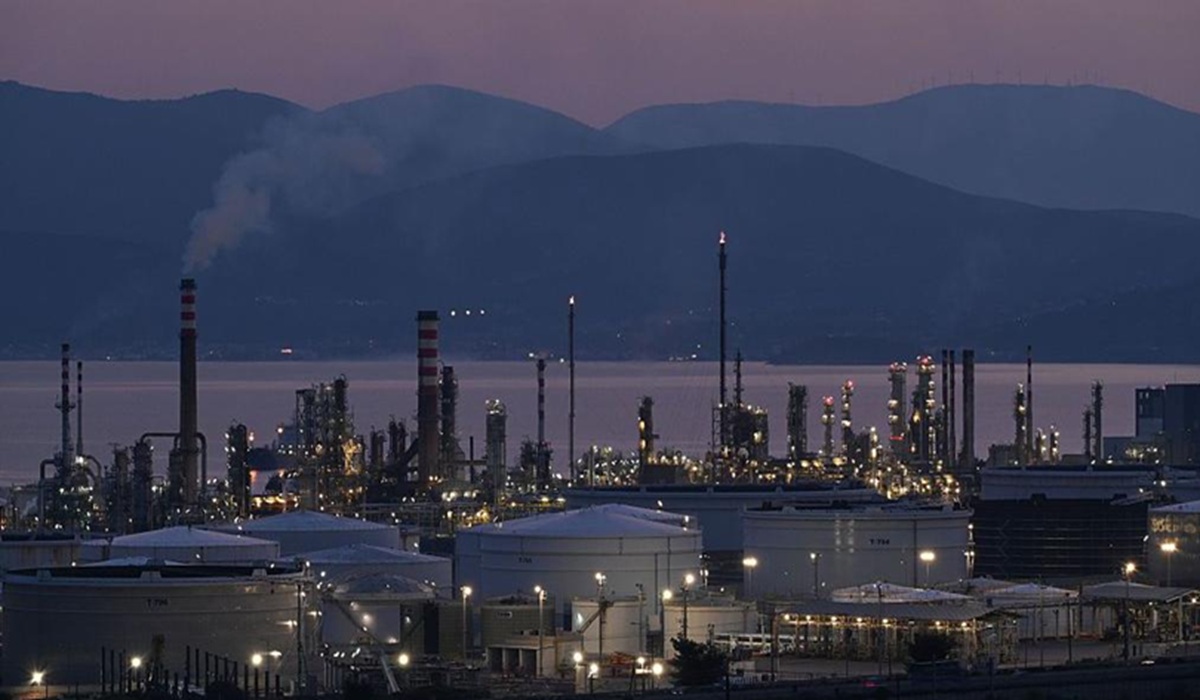
Oil prices fell sharply following the announcement, a move that puzzled those looking purely at the geopolitical "risk premium." Usually, trade tensions or administrative shifts in the U.S. provide a floor for crude. Not this time.
The downward pressure on Brent and West Texas Intermediate (WTI) is a symptom of a deeper, structural rot in global demand. China’s industrial engine, despite various stimulus attempts from Beijing, is idling. When the world’s largest importer of oil shows a lukewarm appetite, even a friendly U.S. administration cannot buoy prices indefinitely.
Furthermore, the "Trump Truce" actually removes some of the immediate inflationary fears that usually drive speculators into commodities. If the trade war isn't escalating today, the perceived need to hedge against a sudden supply shock diminishes. We are seeing a rare alignment where geopolitical de-escalation (however temporary) is actually a bearish signal for the energy sector because it unmasks the fundamental weakness of the global consumer.
The Friction Between Sentiment and Solvency
In our analysis of the current Bloomberg and Reuters Terminal feeds, there is a glaring disconnect that most retail analysts are missing. While "Sentiment Surveys" show that mid-market CEOs are optimistic about
 the Trump administration's deregulation agenda, the "Hard Solvency Data" tells a different story.
We are observing a spike in hedging costs for shipping and logistics. Even with a truce in place, the cost of insuring trans-pacific cargo hasn't returned to pre-2024 levels. This is the "Hidden Friction Point." The market is pricing in a "Trust Deficit."
The numbers suggest that while traders are happy to "buy the rumor" of a trade peace, the "sell the fact" moment happens almost instantly because the underlying cost of doing business in a protectionist environment remains high. We haven't seen a return to globalization; we’ve seen the institutionalization of trade-as-warfare.
Historical Parallel: The 1971 "Nixon Shock"
To understand the current market stasis, one must look back to August 1971. When Richard Nixon suspended the convertibility of the dollar into gold and imposed a 10% import surcharge, the initial market reaction was one of stunned silence followed by a brief rally on the promise of "America First" economics.
However, the subsequent decade was defined by stagflation and a breakdown in international monetary cooperation. The current administration’s use of tariffs as a primary negotiating lever mirrors the Nixonian era's disruption. The "Trump Truce" is, in many ways, a modern iteration of the Smithsonian Agreement-a temporary fix for a systemic shift that the markets haven't fully priced in. Just as in the 70s, the "truce" might simply be the waiting room for a much larger inflationary reset.
Equities: The Great Decoupling
Stock markets remained "mixed," a term financial journalists use when there is no dominant narrative. But beneath the surface, a Great Decoupling is occurring. Defense and domestic manufacturing stocks are holding gains, while multinational tech and consumer staples-companies that rely on seamless cross-border "just-in-time" inventory—are bleeding.
The mixed performance of the S&P 500 hides the fact that the "Mag Seven" are no longer moving in lockstep. Companies with heavy exposure to Asian manufacturing hubs are seeing their multiples compressed, despite the truce. This suggests that the "Efficient Market Hypothesis" is working overtime; the market is discounting the truce because it knows the "Truce-to-Tariff" pipeline is a closed loop.
Key Takeaways for the Q3 Pivot
- Tariff Fatigue: The market's "elasticity" to trade news is weakening. Extensions no longer trigger sustained rallies.
- Energy Surplus: Oil is fighting a two-front war against weak Chinese demand and a surging U.S. dollar, making $80 Brent look like a distant memory.
- Monetary Lag: The Federal Reserve’s path is complicated by these truces; if they prevent a total market collapse, the Fed has more room to keep rates "higher for longer" to combat the inherent inflation of protectionism.
- Sector Rotation: Smart money is moving out of "Global Growth" proxies and into "Domestic Resilience" assets.
The Geopolitical Ripple Effect
The truce doesn't exist in a vacuum. It is being weighed against the ongoing conflicts in Eastern Europe and the Middle East. Traders are currently using the trade truce as a "liquidity window"-a chance to exit over-leveraged positions in volatile sectors before the next inevitable geopolitical flare-up.
There is also the "European Factor." While the U.S. and China play a game of cat-and-mouse, the Eurozone is caught in the crossfire. The weakness in the Euro against the Dollar is making European exports cheaper, but the cost of their energy imports (denominated in USD) is neutralizing that advantage. This "Double Squeeze" is why European indices like the DAX are showing more fragility than their American counterparts.
Future Forecast: The End of "Just-in-Time"
Over the next 18 months, we expect a massive shift in corporate balance sheets. The "Trump Truce" has signaled to CFOs that "Just-in-Time" manufacturing is a liability in a populist era.
- Inventory Bloat: Companies will begin "Just-in-Case" stockpiling, which is inherently deflationary for stock prices (as it ties up cash) but inflationary for consumer goods.
- AI-Driven Supply Chains: Expect heavy investment in AI tools designed specifically to navigate tariff arbitrage-software that can reroute supply chains in real-time as trade policies shift.
- Commodity Bifurcation: We may see a split in commodity pricing—"Clean/Allied" sources of energy and minerals vs. "Sanctioned/Tariffed" sources, creating a two-tiered global economy.
The Next Strategic Hurdle
The obsession with the "Trump Truce" masks the real threat: a global liquidity trap. As the U.S. continues to use its market access as a weapon, other nations are accelerating their "de-dollarization" efforts. This isn't a conspiracy; it's a pragmatic response to a volatile hegemon.
The strategic hurdle for the next 12 months is not "Will there be a tariff?" but "What happens when the dollar is no longer the undisputed refuge?" If trade truces become the standard mode of operation, the dollar's role as a stable store of value is undermined by the very volatility the administration uses as a tool.
Investors are currently playing a game of musical chairs. The music hasn't stopped-the truce ensured that-but the tempo has slowed to a funereal pace. The challenge for the modern architect of capital is to stop looking at the "Truce" as a green light and start seeing it for what it is: a yellow caution flag in a race that is rapidly losing its track.





Comments (0)
Leave a Comment