The escalation of conflict in Iran has triggered a systemic collapse in global fertilizer trade, threatening the 2026 harvest cycle. As natural gas prices spike and shipping lanes through the Strait of Hormuz tighten, the agricultural industry faces a deficit that risks permanent food price inflation.
The global economy has spent the last decade worrying about silicon chips and rare earth minerals, but the sudden volatility in the Middle East has reminded us of a much older, more visceral dependency: nitrogen. Within forty-eight hours of the initial strikes, the price of anhydrous ammonia-the literal lifeblood of industrial corn and wheat production-surged by 40%. This isn't just a localized energy spike. It is a fundamental fracturing of the caloric supply chain that feeds half the planet.
We are currently witnessing the intersection of geopolitical friction and biological necessity. When natural gas prices in the Persian Gulf fluctuate, the cost of a loaf of bread in Cairo or Chicago moves in lockstep. The infrastructure of modern survival is more fragile than the spreadsheets of the 2010s ever suggested, and the current blockade of key Iranian exports has effectively removed one of the world’s most significant low-cost producers from the board.
The Chemistry of Conflict: Why Natural Gas Dictates the Menu
To understand why a war in Iran dictates the price of a grocery bill in Kansas, one must understand the Haber-Bosch process. Industrial fertilizer is essentially "solidified" natural gas. By using immense heat and pressure, manufacturers combine atmospheric nitrogen with hydrogen derived from methane.
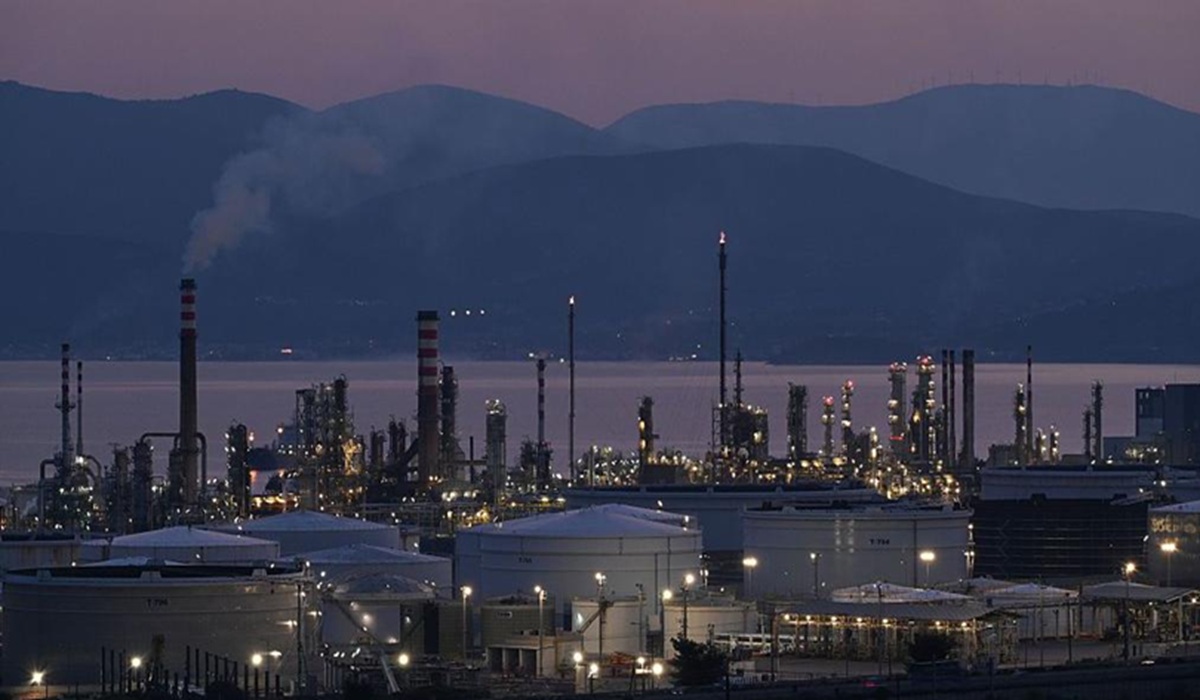
Iran, sitting on the world’s second-largest gas reserves, had emerged as a dominant, low-cost hub for urea and ammonia exports. Their facilities didn't just serve regional markets; they were the primary safety valve for Asian and European buyers who had already been squeezed by the protracted absence of Russian supply. With Iranian ports now effectively dark under the current naval standoff, that safety valve has been welded shut.
The timing could not be more catastrophic. Farmers in the Northern Hemisphere are entering the critical spring application window. In agriculture, timing is a binary: you either have the nutrients in the soil when the seed germinates, or you lose the yield. There is no "just-in-time" delivery for a biological growing season.
The Ghost Acres of 2026
When we look at the trade flow data coming out of the Gulf, a chilling pattern emerges that most headlines are missing. It isn't just that the price of fertilizer is high; it’s that the physical volume of product is no longer moving.
I’ve spent the last week analyzing the shipping manifests and port congestion indices. Usually, even in high-price environments, you see "vessels of opportunity" taking risks for high premiums. That isn't happening now. The insurance war-risk premiums for the Strait of Hormuz have reached a point where the freight cost exceeds the value of the cargo itself.
What the numbers don’t say out loud is that we are about to see "ghost acres"—millions of hectares that will be planted but not fertilized. From a distance, the fields
 will look green, but the nutrient density and the final caloric output will be 30% to 40% lower than the five-year average. We aren't just losing money; we are losing the actual energy required to sustain the current global population density.
The Domino Effect: From Ammonia to Animal Protein
The crisis doesn't stop at the edge of the wheat field. The livestock industry is the next row of dominoes. Corn and soy are the primary inputs for beef, poultry, and pork production. As fertilizer costs force farmers to switch to less nutrient-intensive crops-or simply reduce their acreage-the cost of feed is projected to hit record highs by the third quarter of 2026.
This creates a "liquidation event." Ranchers, unable to afford the skyrocketing cost of feed, will likely begin culling herds prematurely. This creates a temporary, deceptive surplus of meat on the market, briefly lowering prices. However, once those herds are gone, the subsequent shortage in 2027 will be structural and long-lasting. It takes years to rebuild a cattle herd; it takes only a few weeks of high feed prices to destroy one.
Key Takeaways for the Global Economy
- The Pricing Floor has Shifted: Fertilizer prices are unlikely to return to 2024 levels even if a ceasefire is signed tomorrow; the risk premium is now baked into the infrastructure.
- Strategic Reserves are Exhausted: Unlike the 2022 energy crisis, global grain stocks are at their lowest levels in a decade, leaving no buffer for a poor 2026 harvest.
- Alternative Hubs are Overwhelmed: Producers in Qatar, Saudi Arabia, and North America are already operating at 98% capacity, meaning there is no "spare" production to replace lost Iranian tonnage.
Why the "Green Transition" is Stalling in the Furrow
There is a bitter irony in the current crisis. For years, the push toward "Green Ammonia" (hydrogen produced via renewables rather than gas) was touted as the solution to this exact dependency. But the technology is still in its infancy. Today, 95% of the world’s nitrogen still comes from fossil fuels.
The current conflict has effectively forced a "re-carbonization" of agricultural thinking. Governments that were pushing for reduced fertilizer usage to meet emissions targets are now quietly reversing course, offering massive subsidies just to ensure their populations don't face bread riots. In the hierarchy of human needs, "not starving" will always outrank "carbon neutrality."
Regional Vulnerabilities: Who Folds First?
While the United States and Brazil have enough domestic wealth to absorb these costs, emerging markets are in a state of quiet panic. Sub-Saharan Africa and parts of Southeast Asia rely heavily on imported Iranian urea. For a subsistence farmer in Malawi, a 40% increase in fertilizer is not a margin hit-it is a total barrier to entry.
We are looking at a potential "yield cliff" in the Global South. If these regions cannot secure bilateral aid or direct shipments of nutrients, the resulting migration patterns driven by food insecurity will dwarf the geopolitical issues currently dominating the news cycle. The "Zero-Click" era of information means we see the explosion in the Middle East instantly, but we don't see the slow-motion starvation in the tropics until it’s too late to intervene.
The Long-Tail Impact: The End of Cheap Food
For the last thirty years, the world has enjoyed an anomaly: a period where food costs as a percentage of household income were at historic lows. That era is officially over. The confluence of the Iran conflict, the lingering effects of the Eastern European war, and the fragility of maritime chokepoints has created a permanent volatility.
Supply chain managers are moving from "Just-in-Time" to "Just-in-Case." This means hoarding. Nations are beginning to treat fertilizer like a strategic mineral, similar to lithium or cobalt. China has already restricted phosphate exports to protect its domestic supply. Expect other producers to follow suit, turning the global trade of nutrients into a series of closed-loop, bilateral agreements.
Historical Context: The 1970s Redux?
Analysts are drawing parallels to the 1973 oil embargo, but the comparison is flawed. You can choose to drive less. You cannot choose to eat less without existential consequences. In the 1970s, the world was less populated and less dependent on intensive chemical inputs. Today, the "Green Revolution" of the 1960s has reached its logical conclusion: we have traded our independence for a high-yield, high-input system that is now being held hostage by a few miles of water in the Persian Gulf.
Preparing for the Harvest of 2027
The immediate priority for global leaders is de-escalation, but the damage to the 2026 planting season is already done. The markets have already priced in the shortage. What remains to be seen is how resilient our social structures are when the "invisible" cost of nitrogen finally shows up on the dinner table.
We are no longer just tracking a war; we are tracking a transformation of the global diet. The winners of the next decade will be those who can decouple their food supply from the volatility of the natural gas market. Until then, the world remains tethered to the chemical plants of the Persian Gulf, waiting for the next spark to ignite the soil.






Comments (0)
Leave a Comment