The Pentagon identified the first four U.S. Army Reserve soldiers killed during Operation Epic Fury, as a deadly drone strike in Kuwait signals a dangerous escalation. While the military mourning begins, the growing casualty count raises urgent questions about the strategic depth and duration of the burgeoning war.
The names are now etched into the official record of a war many hoped to avoid. Capt. Cody A. Khork, Sgt. 1st Class Noah L. Tietjens, Sgt. 1st Class Nicole M. Amor, and Sgt. Declan J. Coady represent the first confirmed American fatalities in a conflict that has rapidly transformed from a series of precision strikes into a multi-front regional war. These four soldiers, all members of the 103rd Sustainment Command based in Des Moines, Iowa, were killed when an Iranian-launched unmanned aircraft system (UAS) struck a tactical operations center at Port Shuaiba, Kuwait.
For their families in Florida, Nebraska, Minnesota, and Iowa, the geopolitical abstractions of "strategic deterrence" and "regional stability" have collapsed into the singular, devastating reality of an empty chair. Their deaths on March 1, 2026, occurred just 24 hours after the U.S. and Israel initiated a massive air campaign aimed at dismantling the Iranian regime’s military apparatus.
The Strike at Port Shuaiba: A Tactical Failure?
The incident in Kuwait has sent shockwaves through the military community, specifically because it occurred in a location traditionally considered a "safe" rear-echelon logistics hub. The 103rd Sustainment Command is not a frontline combat unit; they are the backbone of the military’s "teeth-to-tail" ratio, responsible for moving the fuel, food, and ammunition that keep the machine running.
Initial reports from the Department of Defense suggest that the incoming drone was a "squirter"—military slang for a munition that manages to bypass sophisticated multi-layered air defense systems like the Patriot or the newer Directed Energy weapons currently deployed in the Gulf. The fact that a single drone could penetrate a high-value logistics node in Kuwait suggests that Iran’s retaliatory capabilities are more asymmetrical and persistent than initial battle damage assessments (BDAs) indicated.
The Human Face of the 103rd
To understand the gravity of these losses, one must look at the experience being withdrawn from the field. These were not raw recruits; they were the institutional memory of the Army Reserve.
- Capt. Cody A. Khork (35): A veteran with a career spanning nearly two decades, Khork had deployed to Saudi Arabia, Poland, and Guantanamo Bay. His leadership in the military police and logistics was considered pivotal for the Des Moines-based command.
- Sgt. 1st Class Nicole M. Amor (39): A mother of two who was reportedly just days away from finishing her rotation. Her husband, Joey Amor, described her as the "light" of their community in Minnesota. Her loss highlights the heavy toll on the National Guard and Reserve components that currently shoulder the bulk of the Middle East's logistics burden.
- Sgt. 1st Class Noah L. Tietjens (42): A wheeled vehicle mechanic from Nebraska with two previous tours in Kuwait. His expertise in keeping aging transport fleets operational was essential for the rapid buildup of Operation Epic Fury.
- Sgt. Declan J. Coady (20): Posthumously promoted, Coady was an IT specialist who had only enlisted in 2023. At just 20 years
old, he represents the youngest of the fallen, a sobering reminder of the generational weight of this new conflict.

What the Numbers Don’t Say Out Loud
When the Pentagon releases casualty figures, they are often sanitized for public consumption. We hear "six dead" and "ten seriously wounded," but the data mask a much more volatile reality on the ground.
From an analytical perspective, the "wounded" figure is the one to watch. While the number of seriously injured has dropped from 18 to 10 as troops receive specialized care, the prevalence of Traumatic Brain Injuries (TBI) and shrapnel-related concussions is soaring. In the 2020 Al-Asad strikes, over 100 troops were eventually diagnosed with TBI. Early indicators from Port Shuaiba suggest a similar or higher ratio of "hidden" injuries.
Furthermore, there is a distinct silence regarding the two "previously unaccounted for" service members whose remains were recovered on Monday. In military parlance, "unaccounted for" often implies a catastrophic structural failure of a facility where remains are not immediately identifiable. This suggests that the impact at the Port of Shuaiba was far more destructive than a "minor drone hit." We are seeing a shift in Iranian tactics: they are no longer aiming for empty hangars to save face; they are aiming for command-and-control centers to inflict maximum human cost.
Operation Epic Fury: The Shift to Total War
The death of these four soldiers has altered the political calculus in Washington. President Trump’s warning that "there will likely be more" before the conflict ends marks a departure from the "surgical strike" rhetoric of the past decade. The administration is now preparing the American public for a campaign that could last five weeks—or much longer.
The objective has moved beyond mere nuclear non-proliferation. With the reported death of several high-ranking Iranian officials in the initial Saturday strikes, the U.S. is now effectively engaged in a decapitation strategy. However, as history shows, removing the head of a regime often triggers a "hydra effect" where local commanders and proxy groups act with more autonomy and less predictability. The drone that hit Kuwait may not have even come from Iranian soil; it could have been launched by a regional proxy, further complicating the rules of engagement.
The Logistics of Endurance
The targeting of the 103rd Sustainment Command is a deliberate strategic choice by Tehran. If you cannot defeat the U.S. Navy in the Persian Gulf, you target the "tail"-the men and women who provide the food, water, and fuel.
Without the 103rd, the B-2 bombers and F-15s involved in the bombardment of Tehran have no fuel. The sailors on the USS Abraham Lincoln have no fresh supplies. By killing logistics experts like Khork and Amor, Iran is attempting to create a friction that slows down the American "Epic Fury" momentum. It is a war of attrition played out in the shadows of shipping ports and supply depots.
Key Takeaways from the Pentagon Briefing
- Casualty Count: Total U.S. deaths in the Iran conflict currently stand at six, with four officially identified.
- Unit Impact: The 103rd Sustainment Command has suffered its most significant single-day loss in recent history.
- Geographic Expansion: The strike occurred in Kuwait, proving that "non-combatant" host nations are now direct targets in the retaliation cycle.
- Operational Investigation: The Pentagon has launched a formal probe into why the drone was not intercepted by localized air defense systems.
- Future Outlook: Defense Secretary Pete Hegseth and military commanders warn of "additional losses" as the mission shifts into more aggressive ground-support phases.
Mourning and Mobilization
As the remains of the fallen are returned to Dover Air Force Base, the debate over the War Powers Resolution intensifies in Congress. Senate Minority Leader Chuck Schumer has called this a "war of choice," while supporters of the administration argue that the "righteous mission" must continue until Iran’s ballistic missile capacity is neutralized.
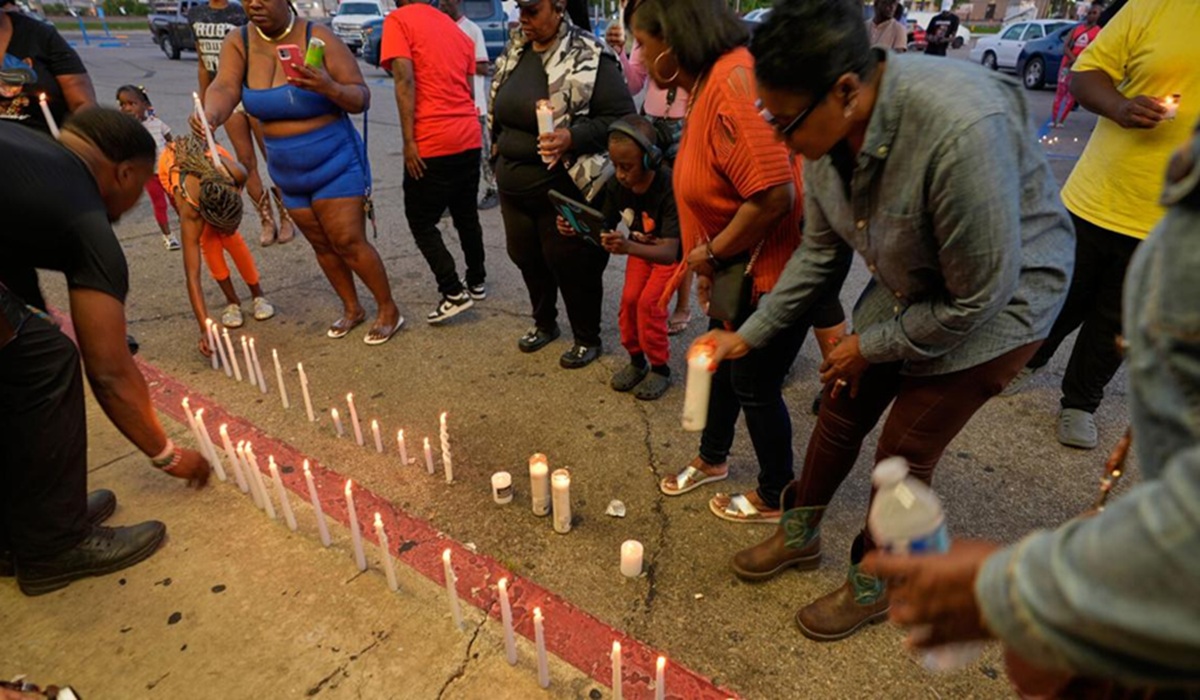
For now, the focus remains on the families. The "Cactus Nation" soldiers of the 103rd are being remembered not for the policy that sent them there, but for the professionalism they displayed in a theatre that turned deadly in an instant. The golden hour of "precision warfare" is over; we have entered the era of high-consequence regional conflict, where the cost of entry is measured in the lives of those who volunteered to serve.





Comments (0)
Leave a Comment