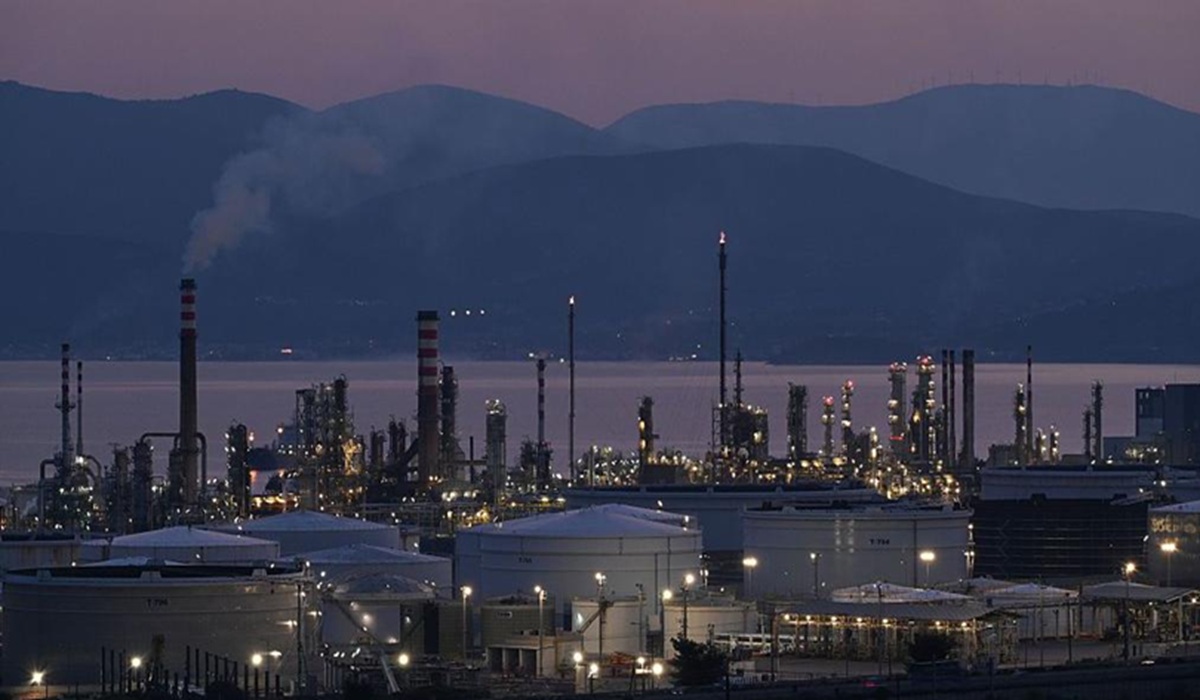
A dual-front energy crisis in the Middle East is forcing the global economy onto a high-alert stagflation watch. Escalating geopolitical tensions are disrupting crude supply chains, threatening to combine stagnant GDP growth with aggressive inflationary pressure, effectively complicating central bank interest rate strategies through 2026.
The global markets are currently navigating a "perfect storm" that few analysts predicted with this much intensity at the start of the year. We are no longer discussing a temporary price spike at the pump. We are looking at a structural reconfiguration of energy costs. As conflict in the Middle East migrates from localized friction to a systemic threat against the world's most vital maritime arteries, the specter of the 1970s is returning to haunt the trading floors of New York, London, and Tokyo.
It is a sobering reality. For the last two years, the narrative focused on a "soft landing"—the idea that central banks could tame inflation without breaking the back of the economy. That optimism is now being stress-tested by fire. When energy costs move from a variable expense to a volatile geopolitical weapon, the traditional tools of monetary policy begin to lose their edge.
The Return of the Stagflation Specter
Stagflation is the ultimate nightmare for a central banker. It is a state where inflation remains stubbornly high while economic growth stalls or retreats. Usually, these two forces act as a see-saw; when growth is high, inflation rises, and when growth slows, inflation cools. The Middle East energy shock has snapped that see-saw in half.
Supply-side shocks, specifically in oil and natural gas, do not care about interest rate hikes. If the Strait of Hormuz is throttled or if regional infrastructure is damaged, no amount of tightening by the Federal Reserve can lower the cost of a barrel of Brent crude. This creates a trap. Central banks must choose between hiking rates to fight energy-driven inflation—which risks crushing the already fragile consumer-or holding steady and watching the cost of living spiral out of control.
Why the 2026 Landscape is Different
Unlike the shocks of 1973 or 1979, the current global economy is deeply intertwined with a "Just-in-Time" supply chain that is far more sensitive to fuel costs. Shipping rates have already begun to decouple from historical norms. When tankers are forced to take the long way around the Cape of Good Hope, it isn't just the oil that gets more expensive; it’s every component, every grain shipment, and every consumer electronic device that relies on global logistics.
We are seeing the emergence of "sticky inflation." This isn't the transitory spike we saw post-pandemic. This is an inflationary floor being built by geopolitical risk. Investors are starting to price in a "war premium" that may not go away even if a ceasefire is reached tomorrow. The trust in a stable, predictable energy flow has been fundamentally compromised.
What the Numbers Don’t Say Out Loud
Looking at the raw data from the Bloomberg Terminal or Reuters Eikon only tells half the story. While the headline price of crude is the number everyone watches, the real story is in the "dark spreads" and the insurance premiums. I’ve been talking to maritime insurers and logistics coordinators who tell a much bleaker
 story than the official trade ministry reports. The cost of insuring a cargo through contested waters has increased by over 400% in some corridors. These costs are invisible in the CPI for months, but they act as a silent tax on every sector of the economy. We are also seeing a massive buildup of "shadow inventories"—nations and private firms hoarding energy off the books. This suggests that the private sector’s fear of a total supply cutoff is much higher than what government officials are willing to admit publicly. The market isn't just reacting to what is happening; it is frantically hedging against a total systemic blackout.
The Breakdown of Traditional Corridors
The geography of energy is being rewritten in real-time. For decades, the flow was predictable. Now, we are seeing a shift toward regionalization. Europe, once heavily reliant on Russian gas and now increasingly on Middle Eastern LNG, finds itself in a precarious position. The "energy bridge" that was supposed to sustain the Eurozone’s industrial heartland is looking increasingly fragile.
The Impact on Emerging Markets
While the U.S. and Europe have the fiscal buffers to absorb some pain, emerging markets are facing an existential crisis. Countries that are net energy importers are seeing their currencies devalue rapidly against the dollar. This creates a secondary inflationary wave. They aren't just paying more for oil; they are paying more for oil in a currency that is becoming harder to acquire.
- Fiscal Deficits: Governments are being forced to choose between subsidizing fuel to prevent civil unrest or maintaining their debt obligations.
- Manufacturing Exodus: Rising costs are forcing a rethink of where goods are made, potentially ending the era of cheap global manufacturing.
- Food Security: Because energy is a primary input for fertilizer and transport, an energy shock is, by definition, a food price shock.
The New Economic Reality
- Policy Paralysis: Central banks are running out of "neutral" moves. Expect more erratic policy shifts as they react to weekly geopolitical headlines.
- The War Premium: Energy prices will likely maintain a 15-20% floor above historical averages due to the perceived risk of supply disruption.
- Diversification Deadlines: The green energy transition, once a 2040 goal, has become a 2027 national security imperative for most Western nations.
- Inventory Hoarding: "Just-in-Case" is replacing "Just-in-Time" as the primary corporate strategy, further driving up baseline costs.
The Historical Context of Hubris
History shows us that energy shocks are rarely isolated events. They are usually the catalysts that reveal underlying economic weaknesses. In the 1970s, it revealed the fragility of the post-WWII industrial model. In 2026, it is revealing the vulnerability of our hyper-globalized, tech-dependent society.
We spent the last decade assuming that energy would always be cheap and plentiful. We built a global economy on that assumption. Now, as the Middle East enters a period of prolonged instability, that foundation is cracking. The stagflation watch isn't just a financial warning; it is a signal that the era of "easy growth" is over.
The Strategy for the Road Ahead
For the individual investor and the global citizen, the strategy must shift from growth-at-all-costs to resilience. Wealth preservation in a stagflationary environment requires a different mindset. Real assets, energy-independent technologies, and companies with massive pricing power are the only lifeboats in this sea of volatility.
The coming months will be a test of endurance. As the heat rises in the Middle East, the chill is felt in the boardrooms of every major economy. The hard truth is that we cannot drill or trade our way out of a geopolitical realignment. We can only adapt to the new, more expensive reality that is currently being forged.




Comments (0)
Leave a Comment