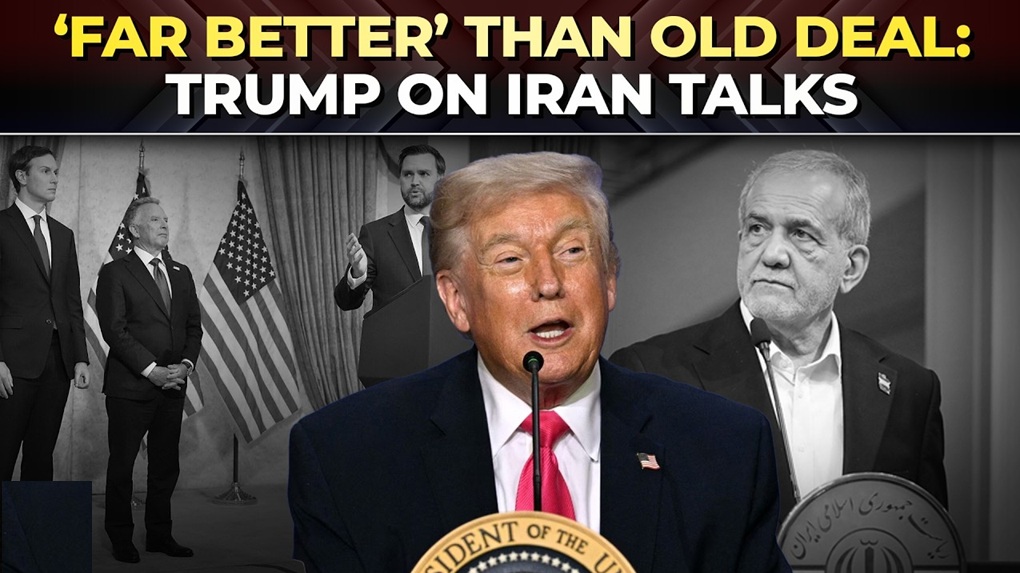
A massive American military buildup in the Middle East has pushed US-Iran relations to a historic breaking point. As President Trump issues a ten-day ultimatum for a nuclear deal, the deployment of dual carrier strike groups and stealth fighters signals that Washington is prepared for high-impact strikes if diplomacy fails.
The shadow of conflict over the Persian Gulf hasn't been this dark in decades. We are no longer talking about "maximum pressure" as a mere economic slogan; we are witnessing it in the form of a massive "armada" moving into striking distance. With the USS Gerald Ford and the USS Abraham Lincoln positioning themselves alongside the largest American airpower assembly since the 2003 Iraq invasion, the transition from coercive diplomacy to kinetic preparation is nearly complete. President Trump’s recent ten-day window for a "meaningful deal" has left the international community breathless, while Tehran prepares for a scenario that Supreme Leader Ali Khamenei has already termed a "regional war."
The Ten-Day Countdown: Diplomacy in the Shadow of the Ford
The diplomatic track in Geneva is currently a race against the logistical clock. While Iranian Foreign Minister Abbas Araghchi has hinted at a "written proposal" to resolve the nuclear standoff, the gap between Washington’s demands and Tehran’s "red lines" remains a canyon. The US is not just asking for a freeze on uranium enrichment; the 2026 mandate includes the total dismantling of Iran’s ballistic missile arsenal and a severed connection to its regional "Axis of Resistance."
For the Trump administration, the strategy is binary: surrender or strike. The arrival of the USS Gerald Ford in the eastern Mediterranean—expected by February 23—serves as the physical punctuation mark to this ultimatum. If the written proposal from Tehran does not concede on enrichment, the military options on the table range from surgical strikes on nuclear facilities at Natanz and Fordow to "decapitation" strikes targeting the senior leadership of the Islamic Revolutionary Guard Corps (IRGC).
Tehran’s Back-to-the-Wall Doctrine
Inside Iran, the atmosphere is a volatile mix of nationalist defiance and internal fragility. The regime is still reeling from the fallout of the massive nationwide protests that began in late 2025. While the government has used a heavy hand to suppress dissent, the "Human Signal" from the streets suggests the social contract is shredded.
However, external pressure often acts as a coagulant for the Iranian security apparatus. The IRGC has recently signaled its readiness by:
- Offensive Posturing: Deploying the Khorramshahr-4 long-range missiles into hardened underground facilities.
- Strategic Drills: Conducting joint naval exercises with Russia and China in the Strait of Hormuz to practice "anti-hijacking" and defensive maneuvers.
- Asymmetric Threats: Reaffirming its ability to shut down the world’s most critical oil choke point if its sovereignty is breached.
For the Supreme Leader, the choice is between a "surrender" that could lead to internal collapse and a "resistance" that could lead to total war. Historical precedent suggests the latter is the regime’s default setting.
The Invisible Logistics of Escalation
When we analyze the current force posture, the most telling metric isn't the number of carriers—it’s the air tankers. Reports indicate that over 108 refueling tankers are currently active in the CENTCOM theater. This is an "Invisible Signal" that any planned air
 campaign is not designed for a one-off "symbolic" strike like we saw in previous years.
This volume of tankers suggests a sustained, multi-week aerial operation capable of hitting hundreds of targets across Iran simultaneously. We aren't just looking at a "nuclear-only" target list. The data points toward a "Total Neutralization" plan: taking out air defenses, missile manufacturing sites, and command-and-control hubs in a single, overwhelming wave. This isn't a bluff; you don't move 100+ tankers into the theater for a press release. It's the infrastructure of an imminent, large-scale campaign.
Multi-Polarity vs. Western Hegemony
The US-Iran crisis is not happening in a vacuum. It is a flashpoint for a broader global realignment. Moscow and Beijing are no longer silent observers; they are active participants in the regional "Security Belt."
- Russia’s Role: Beyond naval drills, Russia has recently supplied Iran with MiG-29 jets and Mi-28NE gunships. Moscow views Iran as a critical "southern flank" partner that keeps American attention diverted from the European theater.
- China’s Calculation: Beijing is in a delicate position. As Iran’s largest oil buyer, it fears a price shock. However, it also has little appetite for a pro-American regime change in Tehran. China’s deployment of anti-stealth radar systems to Iran is a quiet but significant "keep out" sign aimed at US fifth-generation fighters.
- The BRICS Dimension: The recent naval exercises dubbed "Will for Peace 2026" involved the UAE and South Africa alongside Iran and Russia. This signals a growing coalition of nations willing to challenge Western naval dominance in the Indian Ocean.
The Cost of a "Zero-Click" War
If conflict erupts, the "Zero-Click" reality means the global economy will feel the impact before the first missile even lands. We are looking at a potential $150-per-barrel oil scenario and a total disruption of global shipping routes.
Key Takeaways for Global Security:
- The Deadline: The window for a diplomatic breakthrough closes between February 28 and March 3, 2026.
- The Goal: Washington’s objectives have shifted from mere "containment" to what many see as a path toward "regime collapse."
- The Risk: Unlike 2020, Iran’s retaliation is expected to be immediate and multi-fronted, involving Hezbollah in Lebanon and the Houthis in Yemen.
A Region on the Brink
In the halls of the GCC states—Saudi Arabia, Qatar, and Oman—the mood is one of quiet panic. These nations host the very US bases that would launch the strikes, making them the primary targets for Iranian "blowback." While they may wish to see the IRGC’s regional influence curtailed, they are terrified of the "scenario of chaos."
I’ve spoken with regional analysts who describe the current atmosphere as a "death-watch for diplomacy." There is a terrifying realization that President Trump has built so much momentum with this "massive armada" that a de-escalation without a total Iranian surrender would be seen as a domestic political defeat. In New York and DC, the "peace party" has been sidelined. The hawks are in the cockpit, and the flight path is locked.
The Final Countdown
As we move toward the March deadline, the question is no longer if the US will act, but how Iran will choose to meet that action. The "Hard Truth" is that the 1960s-style "strategic patience" is dead. In the zero-sum world of 2026 geopolitics, the Roosevelt Hotel of diplomacy is being gutted for a new skyscraper of military reality.
The next ten days will determine the trajectory of the Middle East for the next decade. If the written proposal from Tehran is anything less than a white flag, the "bad things" the President warned of are likely to become the lead headlines of 2026.



Comments (0)
Leave a Comment