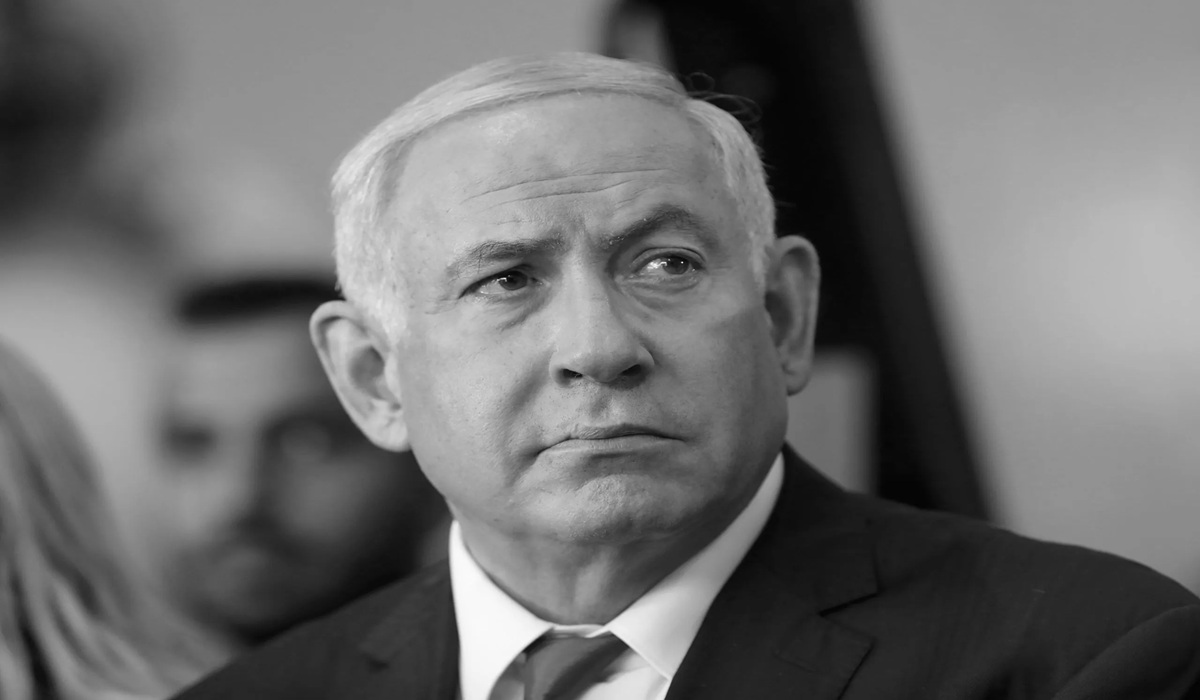
The Pakistan Senate has formally denounced Israeli Prime Minister Benjamin Netanyahu’s strategic initiative to forge military and political alliances with India and other nations. This legislative pushback frames the burgeoning "Netanyahu-Modi" axis as a direct existential threat to regional stability and the collective security of the Muslim world.
The New Architecture of Middle Eastern Power
The halls of the Senate in Islamabad usually echo with domestic squabbles, but this week, the air felt different. It was heavy with the realization that the geopolitical board has been kicked over. When Netanyahu spoke of a "new era" of alliances—specifically reaching out to New Delhi—it wasn’t just diplomatic fluff. It was a signal of a structural realignment that intends to bypass traditional mediators and create a hard-power corridor stretching from the Mediterranean to the Bay of Bengal.
Pakistan’s response was swift and unusually unified. The resolution passed by the Senate doesn't just "deplore" the plan; it treats it as a blueprint for a new kind of containment. For decades, the Palestinian cause and the Kashmir issue were handled as separate, albeit parallel, struggles for self-determination. Now, the Senate is signaling that these two fronts are merging into a single, cohesive strategic challenge.
Why the Israel-India Partnership Changes the Math
We have moved past the era of "secret" cooperation. What we are seeing now is the institutionalization of the Israel-India relationship. It is built on three pillars: defense technology transfer, joint counter-terrorism frameworks, and a shared skepticism toward the traditional pan-Islamic diplomatic bloc.
From an editorial perspective, the concern isn't just about the weapons. It’s about the philosophy of "Total Security." Both Netanyahu and the current Indian leadership have adopted a posture that prioritizes preemptive action over negotiated settlements. For Pakistan, a neighbor to one and a vocal critic of the other, this partnership feels less like a bilateral agreement and more like a pincer movement. The Senate’s outcry reflects a fear that this alliance will embolden unilateral actions in disputed territories, further eroding the authority of the United Nations.
What the Briefings Don’t Say Out Loud
In the quiet corridors of the Foreign Office, the mood is one of calculated alarm. While the public resolution focuses on the moral and religious dimensions of the "alliance against Muslim nations," the private concern is purely technical. Strategists are looking at the integration of Israeli surveillance drones with Indian border management systems. They are looking at the possibility of shared intelligence loops that could blindside regional players during a crisis.
There is also a profound sense of isolation creeping into the narrative. For years, Islamabad relied on a certain level of solidarity within the OIC (Organization of Islamic Cooperation). But as more nations normalize ties with Tel Aviv, that solidarity is fraying. The Senate's resolution is as much a message to "brotherly" Muslim countries—warning them of a slippery slope-as it is a condemnation of Netanyahu. We are witnessing the last stand of a specific type of ideological diplomacy in a world that has turned toward cold, hard realism.
The Erosion of Global Guardrails
The Senate’s debate highlighted a recurring theme: the perceived death of international law. Speakers repeatedly pointed out that when powerful nations form "exclusivist" alliances designed to target specific religious or ethnic blocs, the very concept of a rules-based order collapses.
Netanyahu’s vision, as interpreted by the Senate, isn't about peace through strength; it’s about peace through exclusion.
 By attempting to "forge alliances" specifically framed against the interests of Muslim-majority states, the Israeli leadership is effectively advocating for a fragmented world. This isn't just a Pakistani grievance. It is a fundamental shift in how global diplomacy operates. Instead of broad coalitions, we are seeing the rise of "micro-alignments" that prioritize tactical gains over long-term regional peace.
Key Takeaways from the Senate Resolution
- Rejection of the "Axis": The Senate explicitly labeled the Israel-India collaboration as a threat to the sovereignty of Muslim nations.
- Call for OIC Action: A demand for a unified, rather than fragmented, response from the Muslim world to counter-balance the New Delhi-Tel Aviv link.
- Linkage of Causes: The resolution formally connected the plight of Palestinians with the situation in Kashmir, viewing them through the lens of the same ideological alliance.
- Demand for Diplomatic Review: A push for the government to reassess its engagement strategies in light of these shifting global partnerships.
The Long Road to This Moment
To understand the intensity of the Senate's reaction, one must look back at the 1990s. The post-Cold War era briefly suggested a world where multilateralism would reign. Israel and India, once distant, began a slow dance of necessity. India needed tech; Israel needed a massive market and a strategic partner outside the Western bubble.
Fast forward to 2026, and that dance has become a full-on march. The Abraham Accords changed the chemistry of the Middle East, making it possible for Netanyahu to imagine a world where he could partner with New Delhi while sidestepping the "Muslim street." The Senate’s deploring of this plan is an attempt to re-assert that the "street" still has a voice, even if the governments are moving in a different direction.
The Nuclear Dimension and Regional Parity
We cannot talk about an Israel-India axis without mentioning the nuclear subtext. While neither nation’s nuclear program was explicitly named in the primary resolution, it haunts every syllable. Pakistan remains the only nuclear-armed Muslim-majority state. In the eyes of many Senators, any alliance that strengthens the military capabilities of India-specifically through Israeli missile defense or electronic warfare suites—directly threatens the delicate balance of power in South Asia.
This isn't just about infantry or tanks. It's about the "Qualitative Military Edge" (QME). Israel has long enjoyed a US-mandated QME in the Middle East. The fear in Islamabad is that Israel is now exporting the tools for a similar QME to India. If that happens, the cost of maintaining regional parity for Pakistan will skyrocket, putting further strain on an already fragile economy.
Why This Matters Beyond the Borders
If Netanyahu succeeds in framing his alliances as a "bulwark" against certain nations, the precedent is terrifying. It encourages a "bloc-style" mental framework that we haven't seen since the height of the 20th century. It suggests that security is a zero-sum game: for one alliance to be safe, another group of nations must be inherently viewed as the adversary.
The Senate’s reaction is a warning shot. It tells the global community that these "new alliances" will not be accepted as a benign shift in trade or tech. They will be met with a counter-alignment. We are seeing the early stages of a geopolitical "Correction," where nations that feel excluded by the Netanyahu-Modi framework will naturally gravitate toward other poles—likely China or a reinvigorated regional bloc.
The Human Cost of Strategic Games
Beyond the headings and the diplomatic jargon, there is a human reality. The Senate’s resolution mentioned the "despair" of those living in occupied territories. When leaders talk about "forging alliances" for security, they often overlook the fact that security for a state often translates to increased scrutiny, restricted movement, and diminished rights for the people living on the margins.
The "New Axis" isn't just a map with lines drawn on it. It’s a series of checkpoints, a network of surveillance, and a narrative that justifies the marginalization of millions. This is the heart of the Senate’s grievance. It’s a plea for a return to a diplomacy that recognizes people, not just "strategic assets."
A Crossroads for Islamabad
The Senate has spoken, but the path forward for Pakistan is complex. Deploring a plan is the easy part. Navigating a world where these alliances are already becoming a reality requires more than resolutions. It requires a total rethink of how Pakistan positions itself.
Will the country double down on its traditional alliances, or will it seek to disrupt this new axis through its own unconventional diplomacy? The coming months will tell. But one thing is certain: the era of pretending that Israel and India’s relationship is "just business" is over. It is now the central pillar of a new, and deeply contested, global order.




Comments (0)
Leave a Comment