The German government is pressuring industrial giants Volkswagen and BASF to accelerate de-risking from Chinese supply chains. Amidst record trade deficits, Berlin is pivoting toward a "war economy" strategy, offering massive subsidies for domestic green steel and semiconductor production to ensure long-term European economic sovereignty.
For decades, the backbone of German prosperity was built on a simple, albeit risky, exchange: cheap Russian energy and an insatiable Chinese market. That era is over. Today, the glass-and-steel boardrooms of Wolfsburg and Ludwigshafen are confronting a reality that once seemed unthinkable. The German Ministry of Economics is no longer just suggesting a change in direction; it is mandating a structural divorce.
This isn't just about trade balances. It is a fundamental rewiring of the European industrial heartland. As the European Union watches its trade deficit with Beijing swell to unsustainable levels, Germany is shifting its weight. The focus has moved from "just-in-time" efficiency to "just-in-case" resilience.
The End of the "Wandel durch Handel" Illusion
The old German mantra of Wandel durch Handel—change through trade—suggested that economic integration would inevitably lead to political alignment. That theory has collapsed. In its place is a cold, pragmatic assessment of strategic vulnerabilities. When the Ministry of Economics signals new subsidies for local green steel and chips, it isn't just an environmental play. It is a defensive perimeter.
Volkswagen, perhaps more than any other firm, personifies this struggle. For years, China was VW’s "second home market," providing the lion's share of its global profits. Now, that same market is a source of existential risk. The rise of domestic Chinese EV competitors, backed by state-level support, has turned a lucrative partnership into a predatory competition. Berlin’s message to VW is clear: find a way out, or at least find a way to survive without the lifeline from the East.
The "War Economy" Mindset: Resilience Over Margin
We are witnessing a transition into what analysts are increasingly calling a "war economy" mindset. This doesn't mean mobilization for physical conflict, but rather the total prioritization of national security within the economic sphere. In this new framework, the lowest cost is no longer the highest priority.
Supply chain resilience is the new gold standard. If a semiconductor costs 20% more to produce in Saxony than in Shenzhen, that is now viewed as an acceptable "security premium." The German government’s pivot to subsidizing local production is an admission that the globalized, borderless market of the early 2000s is dead.
The True Cost of the Trade Gap
When you look at the raw numbers coming out of the EU’s trade reports, the picture is grimmer than the headlines suggest. It’s not just that Europe is buying more than it’s selling; it’s the nature of what is being traded.
I’ve spent time looking at the granular shift in high-value manufacturing components. Historically, Europe exported the "brains" (the precision engineering) and imported the "brarawn" (raw materials and low-level assembly). That has flipped. China is now moving up the value chain with alarming speed, capturing the very sectors—chemicals and automotive—that Germany relies on for its middle-class stability. When BASF begins looking at localized production in North America or Europe as a primary hedge against their massive investments in Zhanjiang, you know the internal risk assessments have turned red. We are seeing a "silent capital flight" where future growth is being diverted away from Asia, even if the current assets remain in place.
The BASF Dilemma: Chemicals and Sovereignty
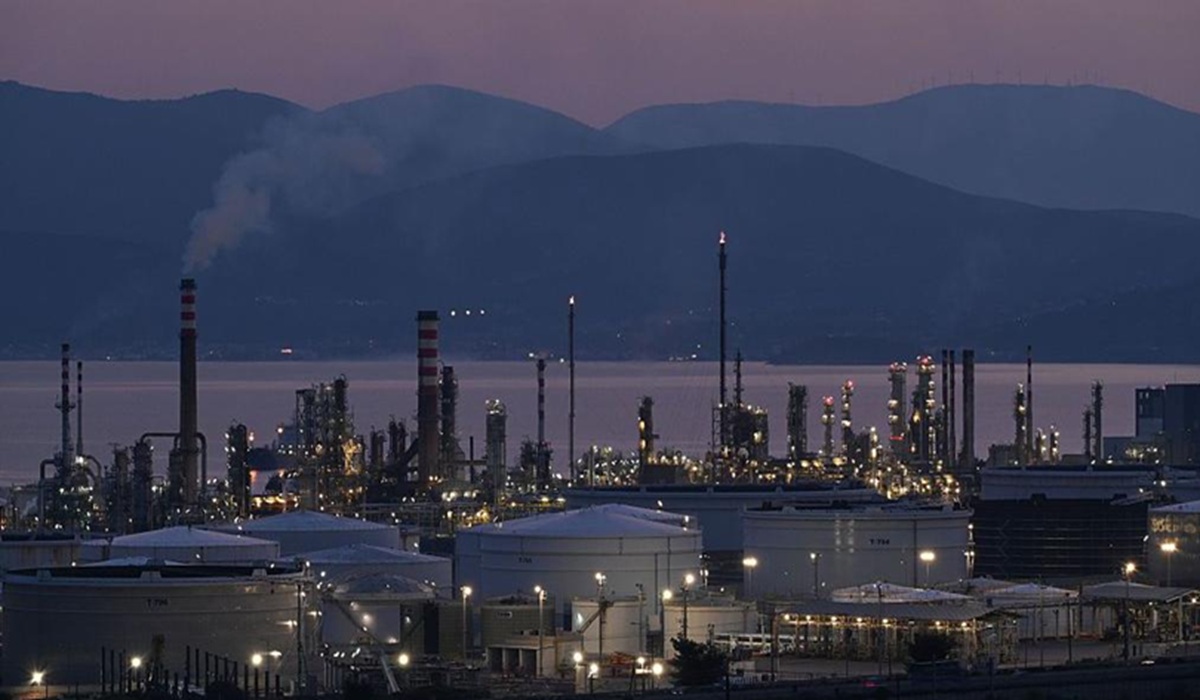
BASF occupies a unique position in this geopolitical chess match. As a chemical powerhouse, its products are the "ingredients" for almost every other industry. If BASF is compromised, the entire German industrial machine stutters.
The pressure to de-risk is particularly painful here because chemical manufacturing is notoriously energy-intensive and capital-heavy.
 Moving a supply chain for specialized polymers isn't like moving a call center. It takes a decade. However, the German government's offer of subsidies for "green steel" and hydrogen-based manufacturing is the carrot designed to make this transition possible. Berlin is effectively trying to build a new, high-tech industrial base that bypasses the need for Chinese intermediaries.
The Historical Context
To understand the gravity of this shift, one must look back at the 1970s oil crisis. At that time, Western economies realized that total dependence on a single region for a critical resource was a recipe for disaster. Today, that resource isn't oil—it’s the entire manufacturing ecosystem.
The current de-risking effort is the most significant reorganization of German industry since the post-WWII Wirtschaftswunder. It represents a move away from the hyper-globalization that defined the last thirty years. By bringing semiconductor and steel production back to European soil, Germany is attempting to insulate itself from the "weaponization of trade" that has become a hallmark of 21st-century statecraft.
Key Takeaways for Global Investors
- Strategic Subsidies: Expect a massive influx of state capital into German "green" tech and microchips to offset the costs of leaving China.
- Profit Margin Compression: De-risking is expensive. Large caps like VW and BASF will likely face margin pressure as they rebuild redundant supply chains.
- EU-China Tensions: The widening trade deficit is no longer just a fiscal issue; it is the primary driver of EU foreign policy.
- The New "Green" Protectionism: Environmental standards are increasingly being used as a legitimate tool to favor local, low-carbon production over high-carbon imports.
The Semiconductor Race on European Soil
The German Ministry of Economics' focus on chips is a direct response to the vulnerabilities exposed during the pandemic. However, it goes deeper than that. Modern cars are essentially "computers on wheels," and modern chemical plants are managed by sophisticated AI and sensor arrays.
If Germany does not control the silicon, it does not control its future. The push for local semiconductor production is meant to ensure that even if a geopolitical "iron curtain" falls across the Pacific, the assembly lines in Bavaria and Lower Saxony won't grind to a halt. This is the definition of the war economy: preparing for the worst-case scenario while hoping for the best.
Why "De-Risking" is Not "Decoupling"
It is important to make a distinction that Berlin frequently emphasizes: this is not decoupling. Germany cannot—and will not—completely sever ties with the world’s second-largest economy. That would be economic suicide.
Instead, de-risking is about removing "single points of failure." It is about ensuring that if a supply route in the South China Sea is closed, or if a political dispute leads to an export ban on rare earth minerals, the German economy has enough "buffer" to survive. It is a strategy of diversification, not isolation.
The Impact on the German Workforce
The transition to a more resilient, localized economy will be a bumpy ride for the German labor market. For decades, the German worker has benefited from the global demand for "Made in Germany." As companies like VW shift their focus to expensive domestic production, the pressure to automate will increase.
The green steel subsidies are a vital part of this transition. They are designed to keep the heavy industry jobs in Germany by making them "future-proof." By leading the world in carbon-neutral industrial processes, Germany hopes to create a new niche that even a rising China cannot easily replicate.
A Sovereign Future?
The gamble Berlin is taking is immense. They are betting that the German taxpayer is willing to foot the bill for a more expensive, but more secure, industrial base. They are also betting that giants like Volkswagen and BASF can pivot fast enough to avoid being crushed by the very state-backed competitors they helped build in China.
In the zero-click era of information, the "hard truth" is that the era of easy profits from globalization is over. Germany is leading the charge into a more fractured, but perhaps more stable, economic reality. The success of this "war economy" mindset will determine whether Europe remains a global power or becomes a museum of industrial history.



Comments (0)
Leave a Comment